

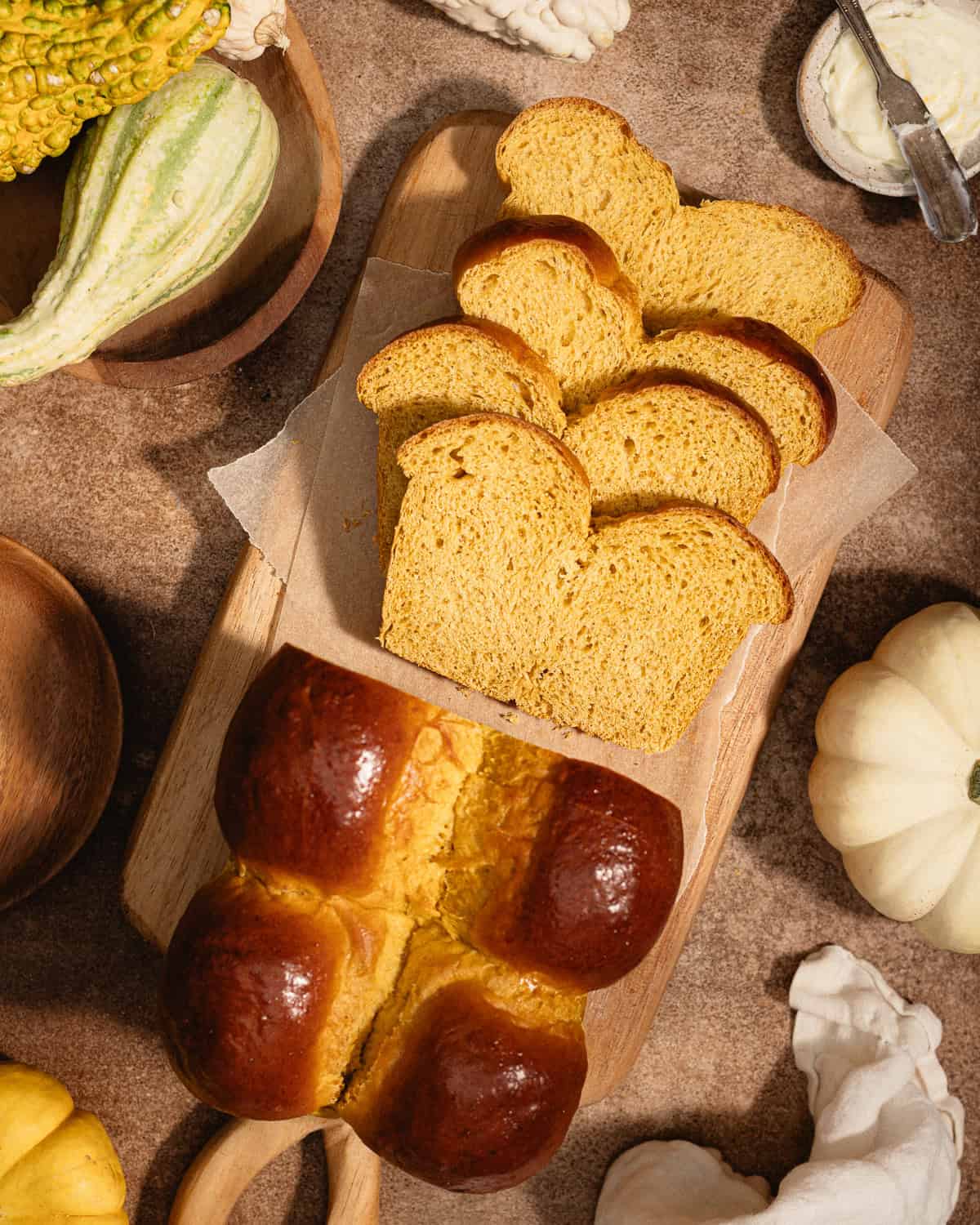
This pumpkin sourdough discard brioche is made with sourdough discard, commercial yeast, pumpkin puree, butter, milk and eggs for a soft, fluffy loaf with a rich, tender crumb. Because this recipe uses yeast, you won't need to wait all day for your dough to rise, and you can mix, shape and bake the loaf in just a few hours.
Jump to:
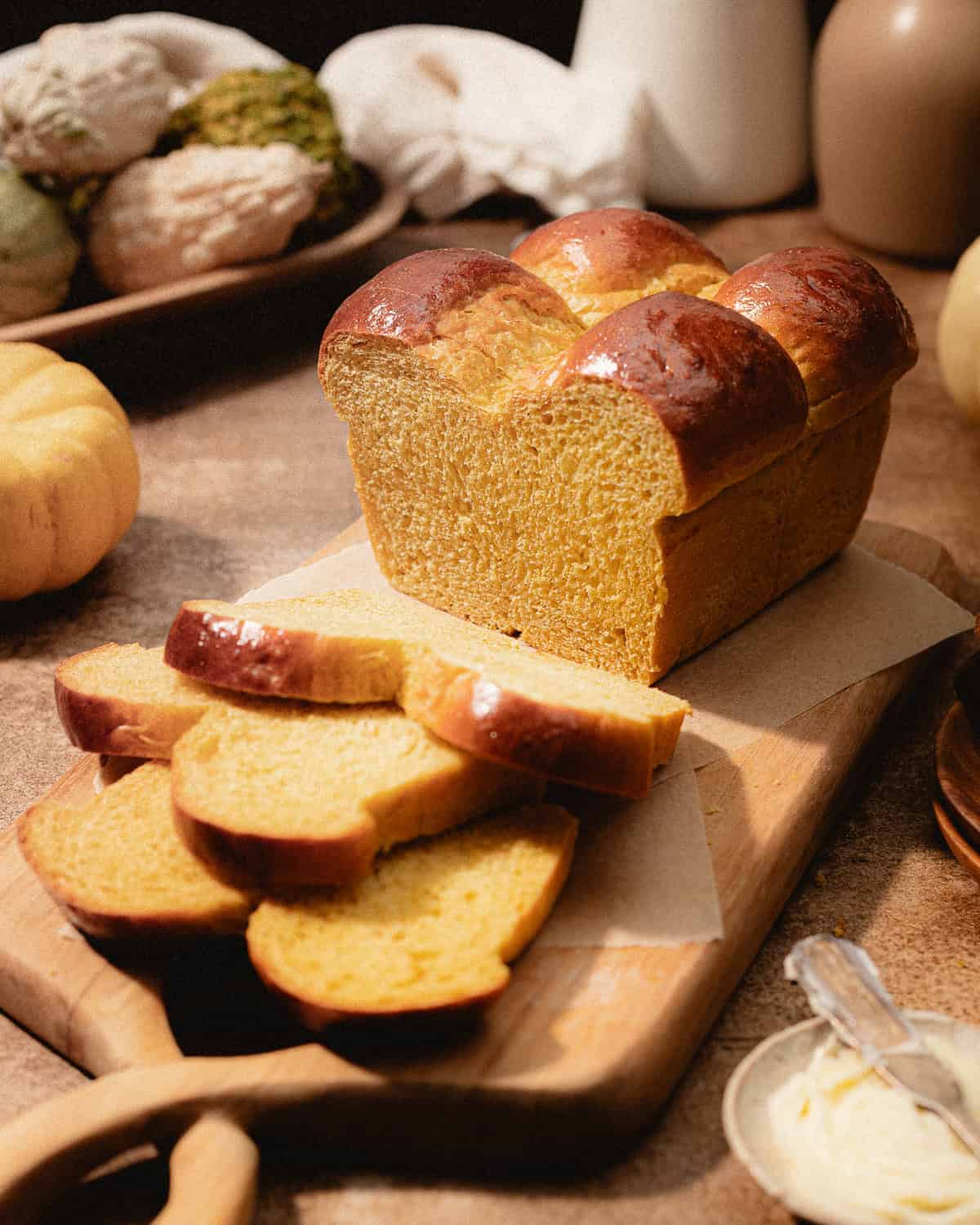
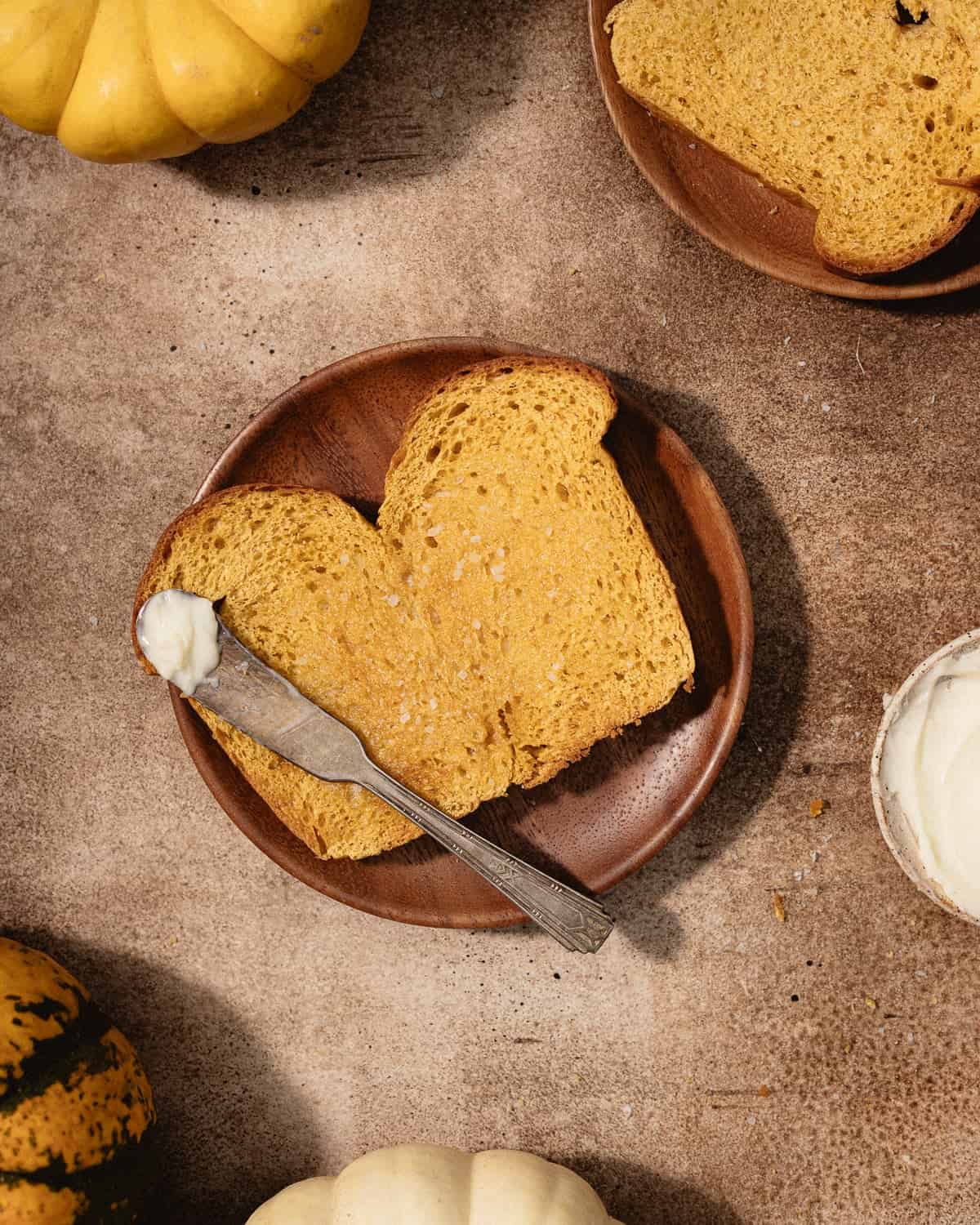
I'm training for my second marathon and currently on a quest to find new sources of carbs. If you can believe it, there is apparently a way to get sick of eating bread, so I've been getting a little more inventive with it lately. This pumpkin brioche has been a great source of energy for my runs, and the fact that it's so delicate, light and fluffy is a bonus. I've been eating it toasted in the morning with honey and peanut butter, or with homemade butter and preserves on my days off.
I always look forward to my post-long-run French toast, and thick slices of this brioche are especially good for it. The eggs add a little extra protein, which makes it feel like a more substantial recovery breakfast.
I love it when fall rolls around because pumpkin is one of my favorite ingredients to bake with because it adds moisture, a beautiful orange color and a subtle earthy flavor to my bakes. I have so many recipes that use this ingredient on my blog and if love baking with it too, you can find even more ideas in my round up of pumpkin sourdough recipes, including both sweet and savory recipes made with active starter and discard.
Sourdough discard is also a great way to add more flavor to soft, enriched breads like this one. You may also enjoy my sourdough discard challah or sourdough discard dinner rolls.
Key Ingredients
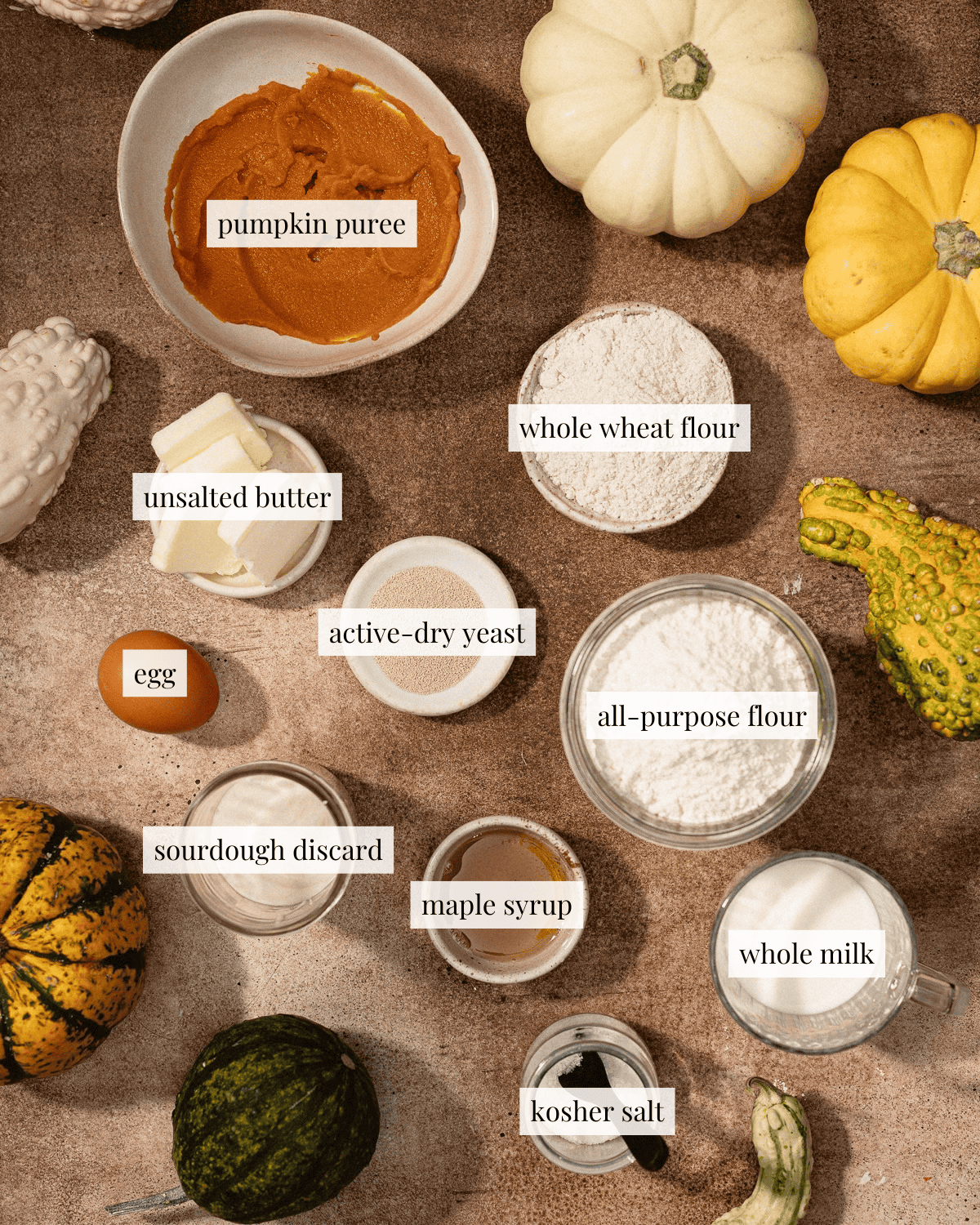
Add a mix of flours for texture and flavor: I used my trusty combination of all-purpose flour for softness and whole wheat flour for a hint of nuttiness in this recipe. If you don't have whole wheat flour, replace it with an equal amount of all-purpose flour. But, don't use 100% whole wheat flour, since the dough may become too dry and dense without additional water (try my recipe for whole wheat sourdough discard sandwich bread instead).
Use canned pumpkin puree: This recipe was developed using canned pumpkin puree. You can use roasted pumpkin instead, but its moisture content may vary and could result in a wetter dough. Most importantly, do not use pumpkin pie filling since it has added ingredients.
Whole milk and butter for softness: Dairy helps give brioche its tender, pillowy texture. I've also had success using plant-based milk and substituting the butter with plant-based butter or oil for a similar result.
Can I make this without yeast?
Yes, however you'll need to make a few adjustments to the ingredients and timeline.
Use an active starter: Since you won't be using active-dry yeast, replace the sourdough discard with an equivalent amount of mature, active sourdough starter.
Allow more time for fermentation: A good rule of thumb is 4 to 6 hours for the first proof and 2 to 4 hours for the final proof. Timing can vary depending on the strength of your starter and the conditions in your kitchen, so watch the dough rather than the clock.
Step-by-step Instructions (with photos)
Make the dough
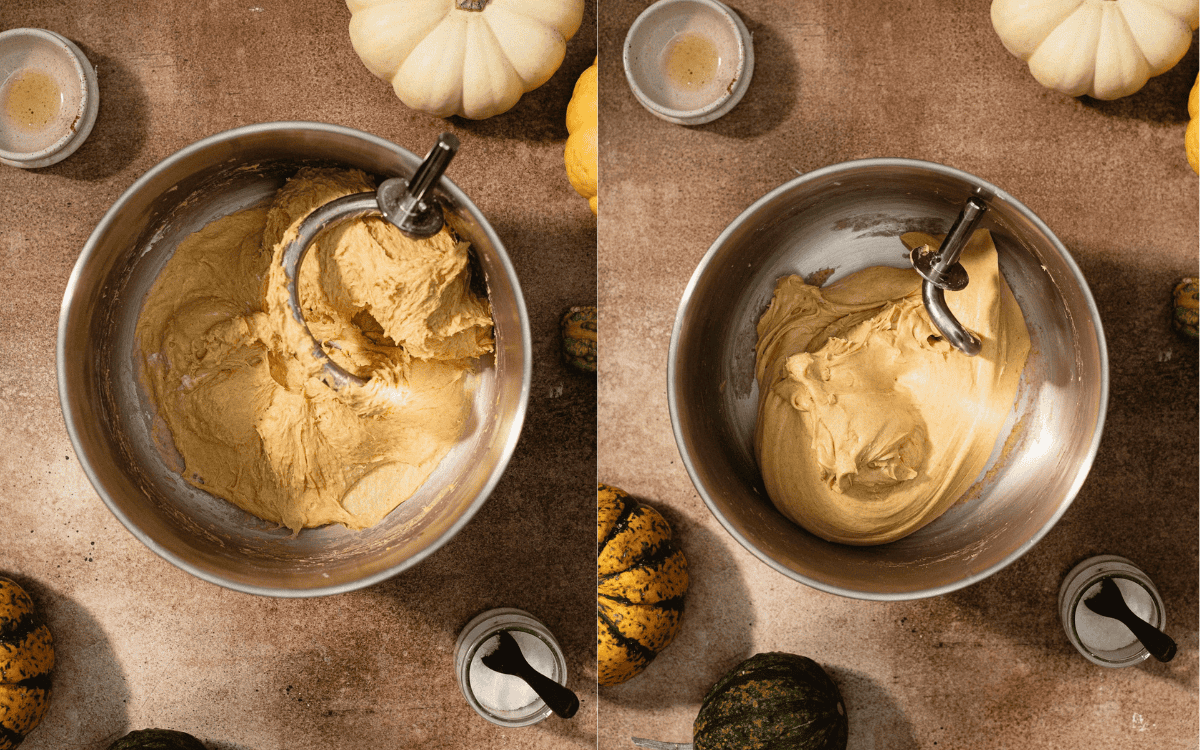
Mix ingredients together until a shaggy dough forms. With the mixer on, add the butter in one tablespoon at a time. Cover the bowl and let the dough rest for 15 minutes. Continue mixing with the dough hook until the dough looks smooth and pliable.
Proof the dough
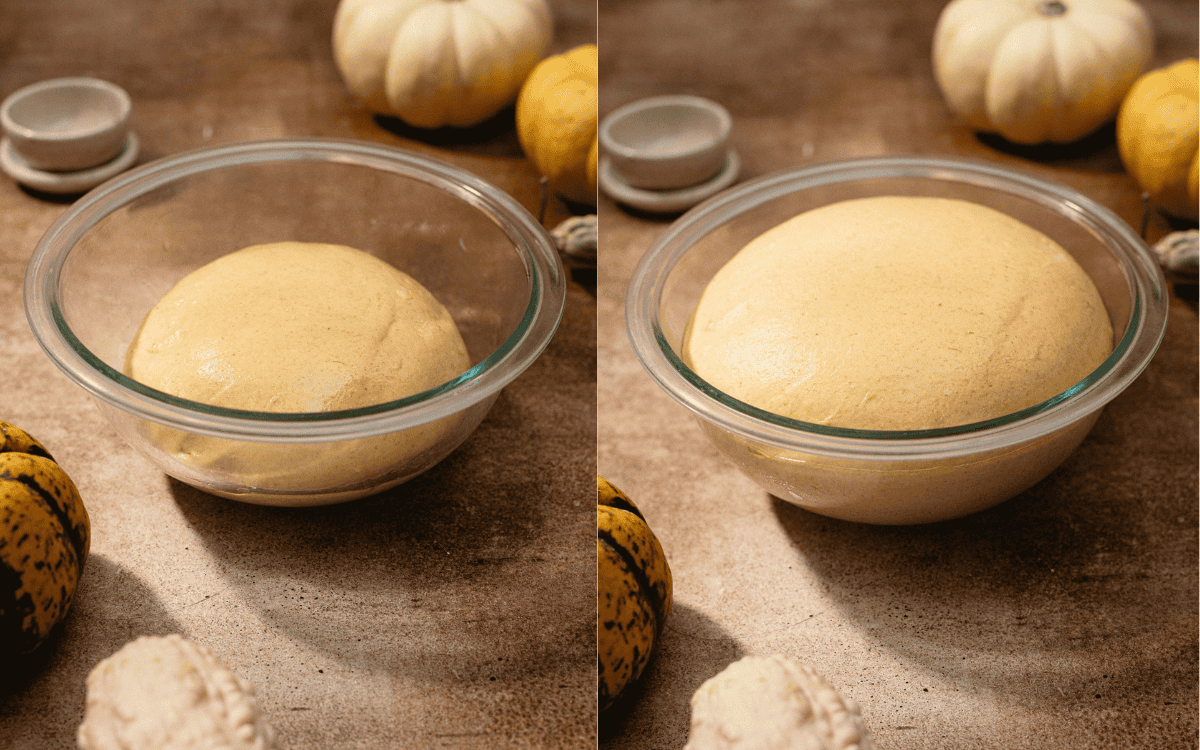
Gather the dough into a tight ball and transfer to a lightly-greased bowl. Let the dough rise until doubled in volume, about 45 minutes to 1 hour.
Shape the loaf
Divide the dough into 6 even portions. Round each portion of dough into a tight ball. Nestle the dough portions into an 8 by 5-inch prepared loaf pan.
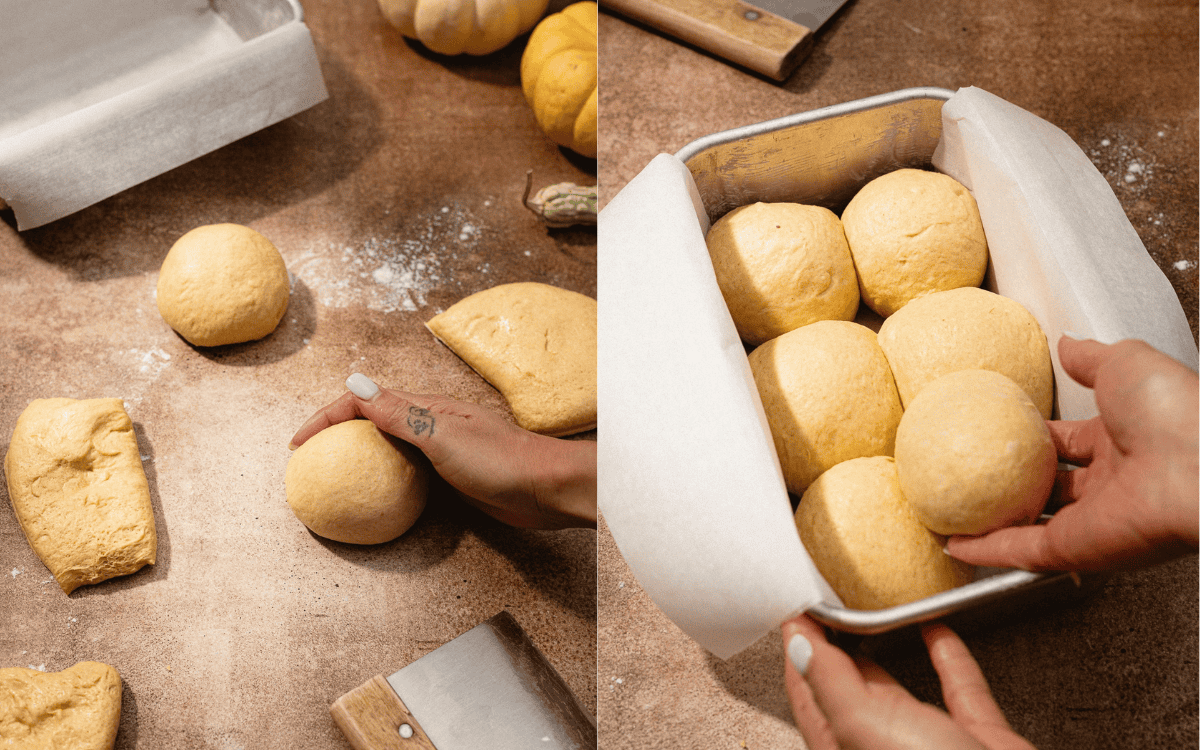
You can shape this dough any way you like, but I prefer this look for my brioche loaves.
Final proof
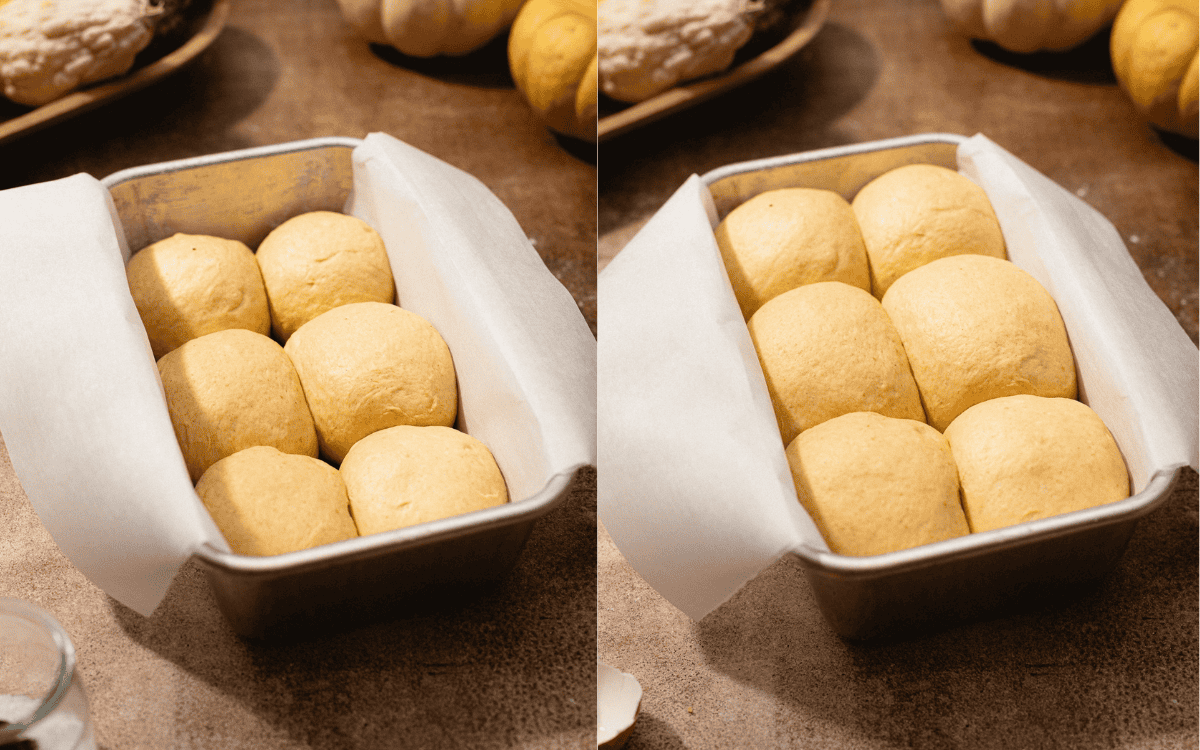
Cover the pan with a greased piece of plastic wrap. Let the dough proof until it almost fills the pan, about 30 to 45 minutes.
Bake the loaf
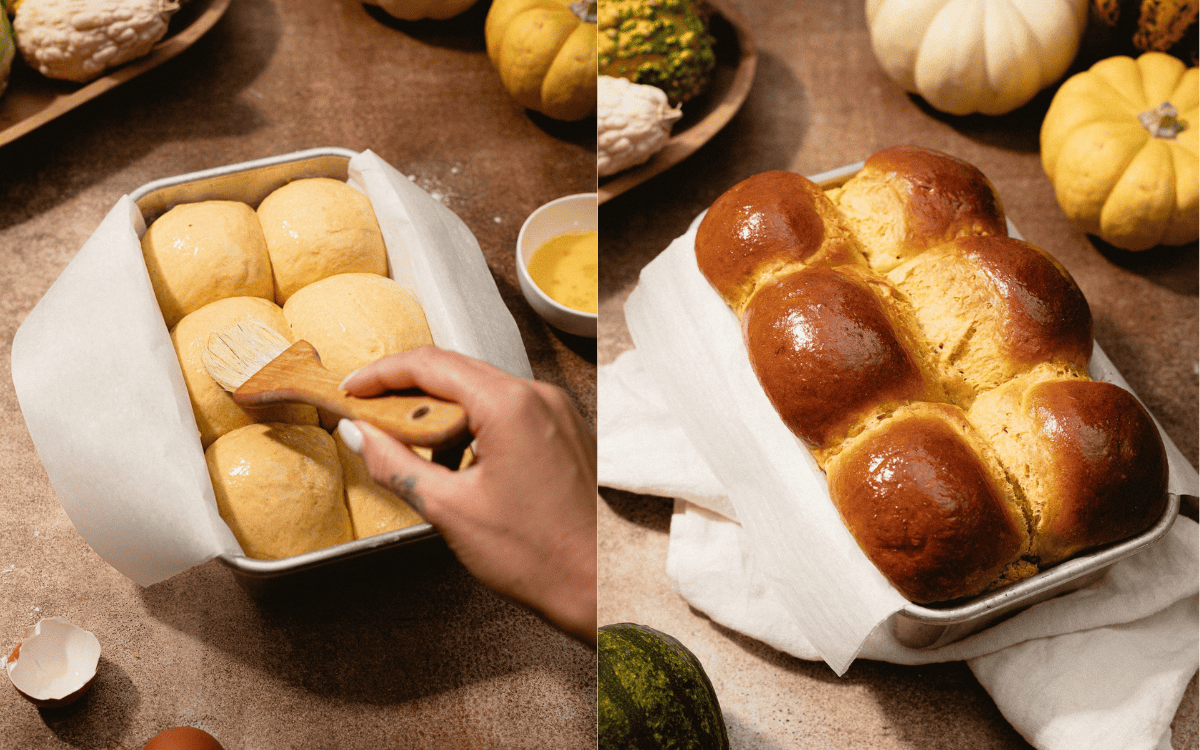
Brush the top of the dough with egg wash. Bake the loaf at 350 F for 40 to 45 minutes.
How do I know my bread is baked?
The best way to tell whether your bread is done is by measuring the internal temperature. Your bread should be about 190 F when probed with an instant-read thermometer.
Make Ahead Instructions
The night before: Make the dough as instructed, let it proof, then shape it and place it in the refrigerator for the final rise overnight. Bake straight from the fridge as instructed.
Freeze the loaf: Let the loaf cool completely, then slice and store the slices in a zip-top bag. Freeze for up to 1 month and toast the slices whenever you're ready to enjoy them.
Did this recipe rise to the occasion?
★★★★★
Leave a star rating and a comment. Your feedback inspires future recipes and helps others feel confident choosing what to bake next. I read and respond to every message.
If you're looking for additional ways to support my work, share this recipe or buy me a Ko-fi. Every little bit helps me keep creating the recipes and guides you enjoy.
Thank you for your support!
Sourdough Discard Pumpkin Brioche Recipe
This section may contain affiliate links
Ingredients
Dough
- 7 g active-dry yeast
- 113 g milk
- 28 g maple syrup
- 1 egg
- 120 g pumpkin puree
- 113 g sourdough discard
- 300 g all-purpose flour
- 60 g whole wheat flour
- 9 g salt
- 56 g unsalted butter softened
Egg Wash
- 1 egg
Click US Customary to view volume measurements
Instructions
- Activate the yeast: Whisk together the active-dry yeast, milk and maple syrup in the bowl of your stand mixer. Cover with plastic wrap and let the yeast bloom until foamy and fragrant, about 15 minutes.7 g active-dry yeast, 113 g milk, 28 g maple syrup
- Make the dough: Add the egg, pumpkin puree and sourdough discard into the yeast mixture. Whisk the ingredients in until well combined.120 g pumpkin puree, 1 egg, 113 g sourdough discard
- Add the flours and salt into the bowl of your stand mixer and mix on low speed using a dough hook until a shaggy dough forms.300 g all-purpose flour, 60 g whole wheat flour, 9 g salt
- Increase the speed to medium low and add the butter into the dough one tablespoon at a time. The dough should look gradually less greasy as the butter is absorbed.56 g unsalted butter
- Cover the bowl with plastic wrap and let the dough rest for 15 minutes. This gives the flour time to fully hydrate and allows the dough to gain strength without overmixing, which can cause it to become too warm and impede gluten development.
- After the rest period, knead the dough using the dough hook at medium speed until it looks completely smooth and pliable, about 3 to 5 minutes. The dough should cling to the hook and release from the sides of the bowl.
- Proof the dough: Turn the dough out on a clean work surface and lightly knead it a few times. Round the dough into a tight ball and transfer it to a lightly-greased bowl. Cover the bowl with plastic wrap and let the dough rise untouched until doubled in volume, about 45 minutes to 1 hour. (See note)
- Prep: Brush a 8 by 5 inch loaf pan with butter, then line it with a piece of parchment paper (optional).
- Shape the loaf: Turn the dough out on a lightly floured surface and divide the dough into 6 even portions. Round each portion into a tight ball. Nestle each ball into your prepared loaf pan. (See note)
- Final proof: Cover the pan with plastic wrap and let the dough proof until it fills the pan, about 30 to 45 mins.
- Preheat the oven: When the dough is almost fully proofed, preheat the oven to 350 F.
- Bake the loaf: Brush the top of the dough with egg wash. Bake for 40 to 45 minutes or until golden brown and the center of the loaf measures 190 F when probed with an instant-read thermometer.1 egg
- Enjoy: Transfer the loaf immediately to a wire rack and let it cool completely before slicing.
- Store: Store any leftover slices in an airtight container for up to 1 week at room temperature or freeze the slices for up to 1 month.
Tips
These recipes were developed and tested using grams for precise measurements. To increase your chances of success, I recommend investing in a kitchen scale. I've included rough volume estimates (in tablespoons and cups), but they might not be totally accurate.
Remember all ovens are unique, these recipes were tested in my oven which runs cooler than others. You might need to lower the temperature if your bake appears to be browning too quickly. Monitor your bake closely and make adjustments if needed.
Notes
- If you want to make this loaf using active sourdough starter, simply leave out the instant yeast and substitute active starter for the discard. Then adjust the rise time, a good rule of thumb is 4 to 6 hours for first proof and cold proof in the refrigerator overnight.
- Proofing could take up to 2 hours, depending on the temperature in your kitchen.
- You can shape this bread anyway you want, I simply prefer this method for my brioche loaves.
- The best way to tell if your bread is done is with an instant-read thermometer, the center should be at least 190 F.
- Don't be tempted to slice into the loaf while it's still warm. Cutting it too soon releases steam and moisture, which can cause the bread to dry out and stale more quickly.
Nutrition
I am not a nutritionist or dietitian, any nutrition information provided is an estimate.



Did you make this recipe? Do you have questions? Let me know below!