

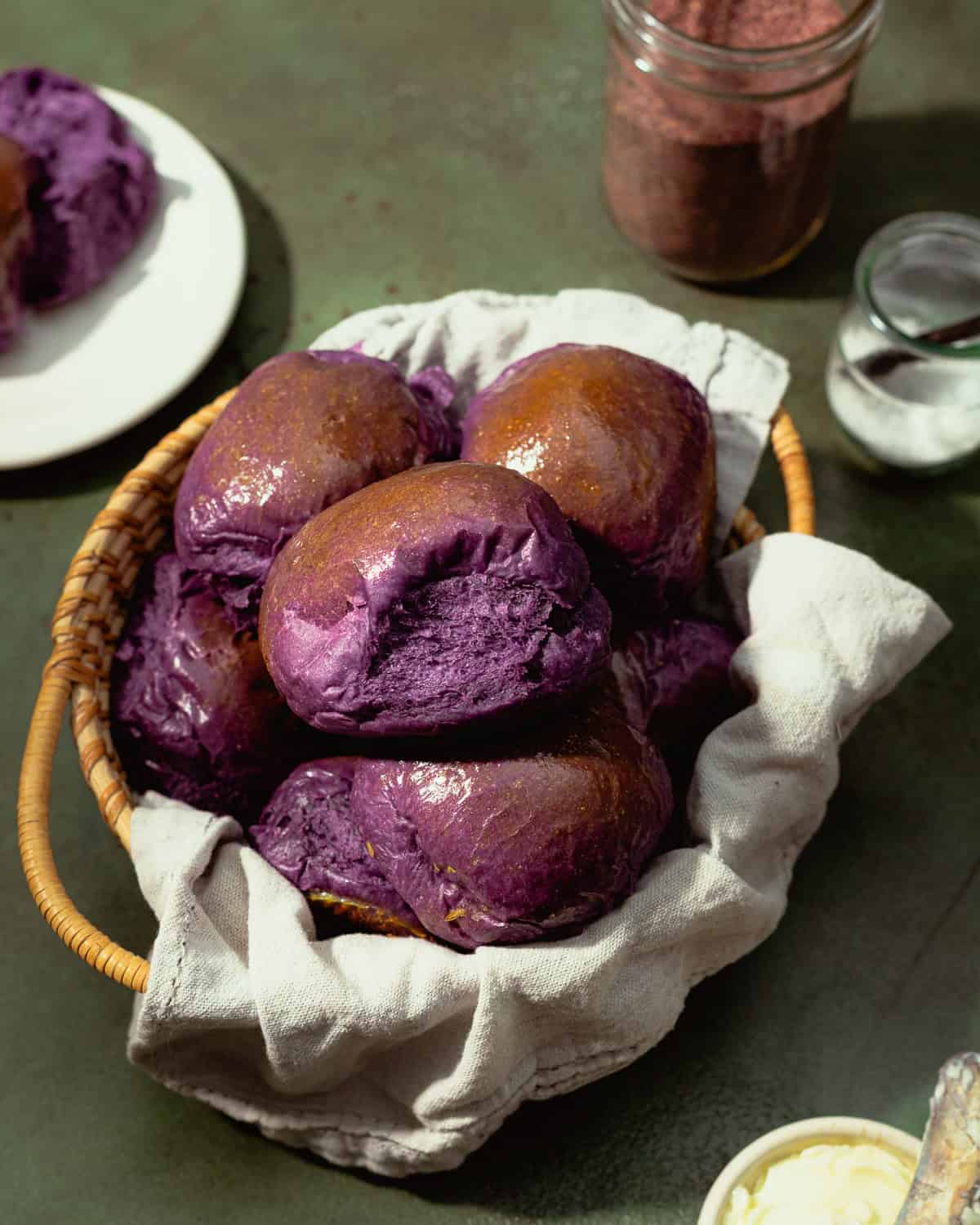
These Sourdough Ube Rolls are so soft they almost feel like cotton candy, with a beautiful purple color and delicate floral flavor from ube. You've probably enjoyed ube as a dessert, but these rolls are more like traditional dinner rolls which makes them versatile and a great addition at a dinner party or holiday menu. Sourdough discard enhances the flavor of the rolls with a subtle tang, while the addition of yeast speeds up fermentation so you can have them ready in just a few hours.
Jump to:
A Little Bit About Ube
Ube is a purple yam that's a staple in Filipino cuisine, especially in halaya, a creamy dessert made by cooking mashed ube with milk, sugar and butter. Growing up in the Philippines, halaya was always part of special occasions, especially our Christmas and New Year's celebrations, Noche Buena and Media Noche.
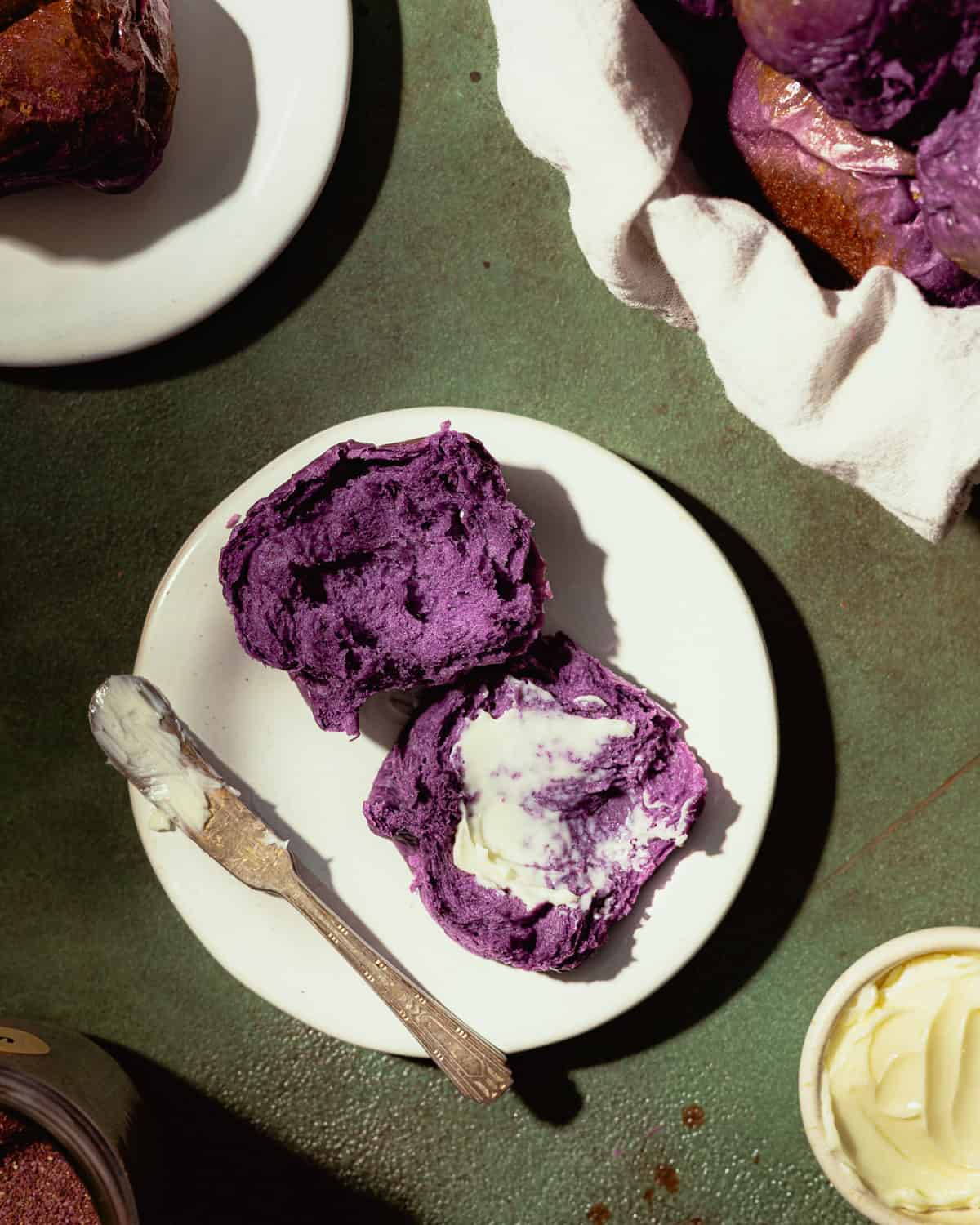
I've used it in everything from my Ube White Chocolate Macadamia Nut Sourdough Cookies to my Sourdough Ube Pan de Coco. Although ube is usually associated with sweets, I wanted to explore its versatility by making something less sweet. I added ube halaya to the dough, and the starches in the purple yam made these rolls so pillowy soft, I almost couldn't believe their texture. They have a subtle sweetness and a lovely floral, slightly vanilla flavor from ube, making them a great alternative to traditional dinner rolls.
If you're new to baking with ube, I wrote a guide to baking with ube for King Arthur Baking, where I explain the different forms available, what they taste like and how to use them in your recipes.
Key Ingredients
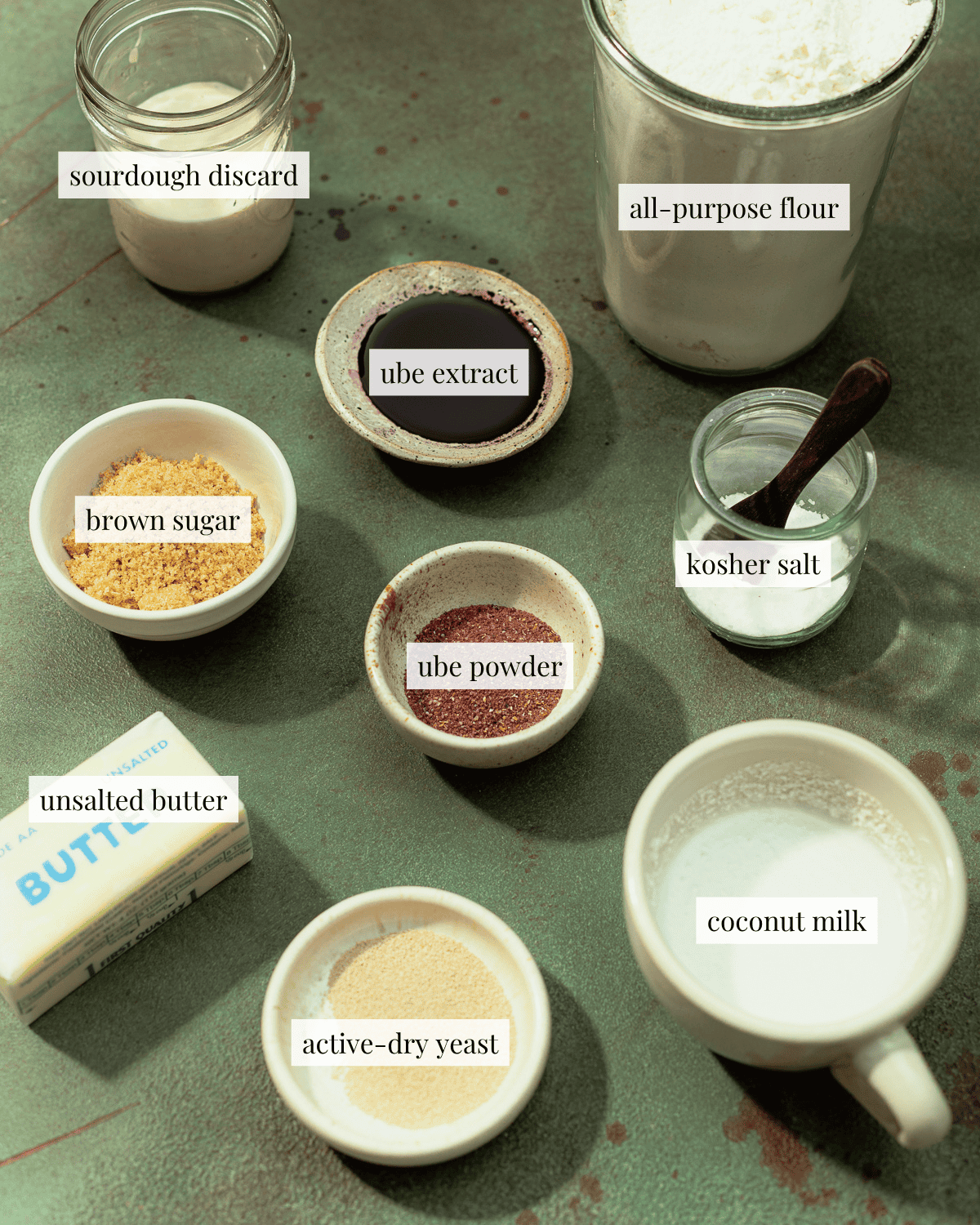
Use ube powder for the softest texture: I made the ube halaya for these rolls using ube powder. The starches in the ube absorb and retain moisture, helping keep the dough hydrated and giving the rolls their incredibly soft, pillowy texture. If you don't want to make your own, feel free to use 150 grams of store-bought ube jam.
Add ube extract for a more intense color and flavor: Optional but highly recommended, ube extract enhances the natural flavor of the purple yam and intensifies the vibrant purple color of these rolls. A little goes a long way! You can leave it out, but your rolls will have a pinker hue compared to the photos.
All-purpose flour makes these rolls super soft: All-purpose flour has a lower protein content than bread flour, which helps create a softer, more tender crumb while still providing enough structure for fluffy rolls. If you prefer a chewier texture, you can use bread flour instead. I don't recommend using whole wheat flour for this recipe, as the rolls may turn out too dry and gummy.
Coconut milk adds richness and a subtle coconut flavor: I used canned coconut milk, but you can substitute any plant-based milk or whole milk.
Step-by-step Instructions (with photos)
Make the ube halaya
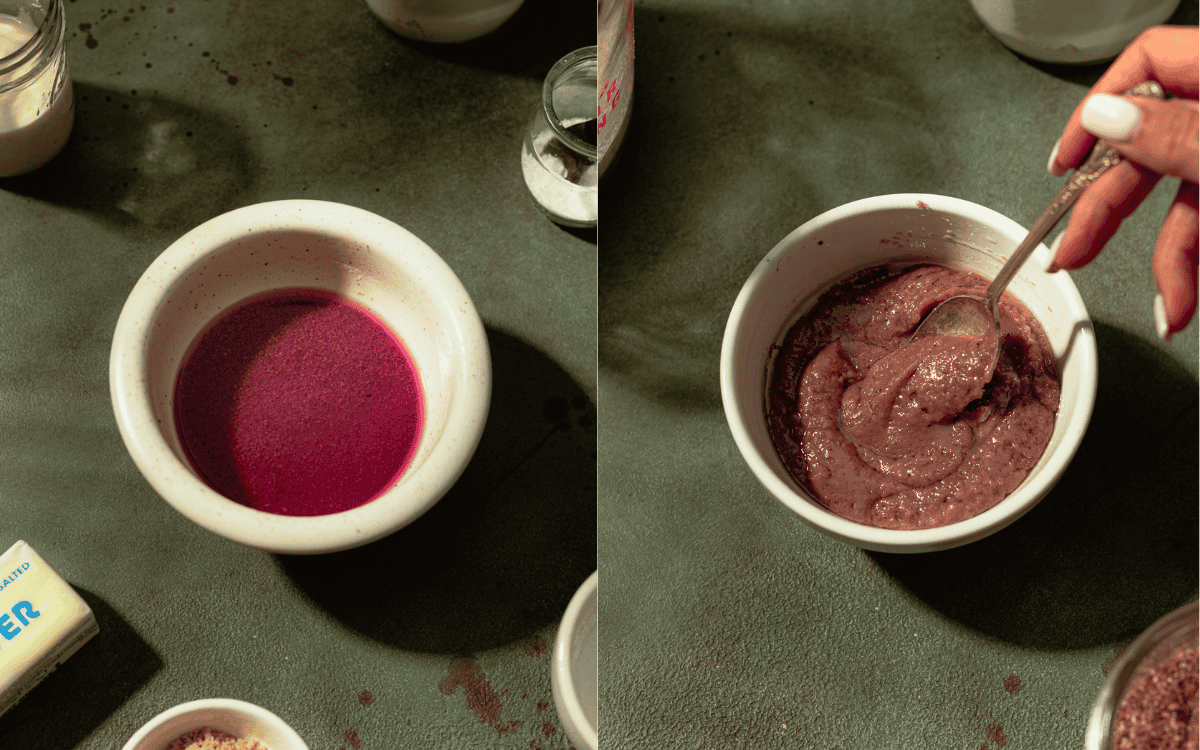
Soak the ube powder for at least 15 minutes to rehydrate. Cook the ube powder with the soaking liquid and coconut milk. Stir the butter in once the mixture thickens.
Make the dough
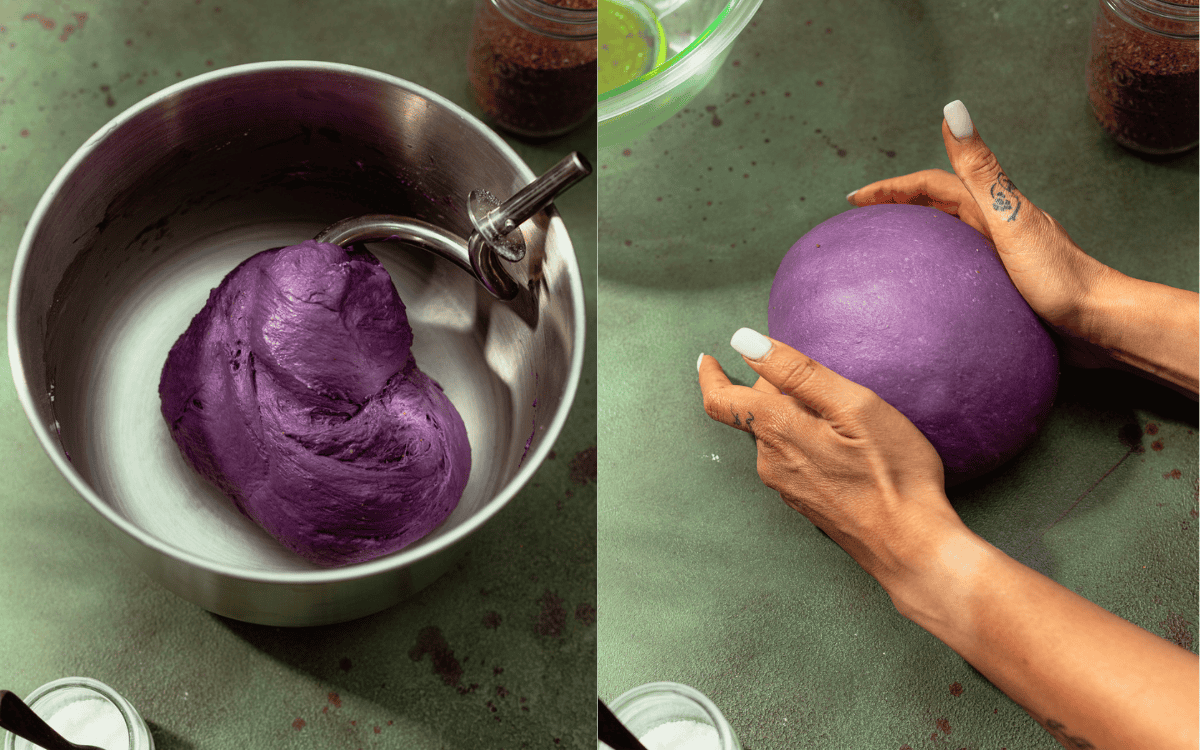
Combine the ingredients including the cooled halaya in the bowl of your stand mixer. Mix until a smooth, pliable dough forms. Gently round the dough into a tight ball.
Let the dough rise
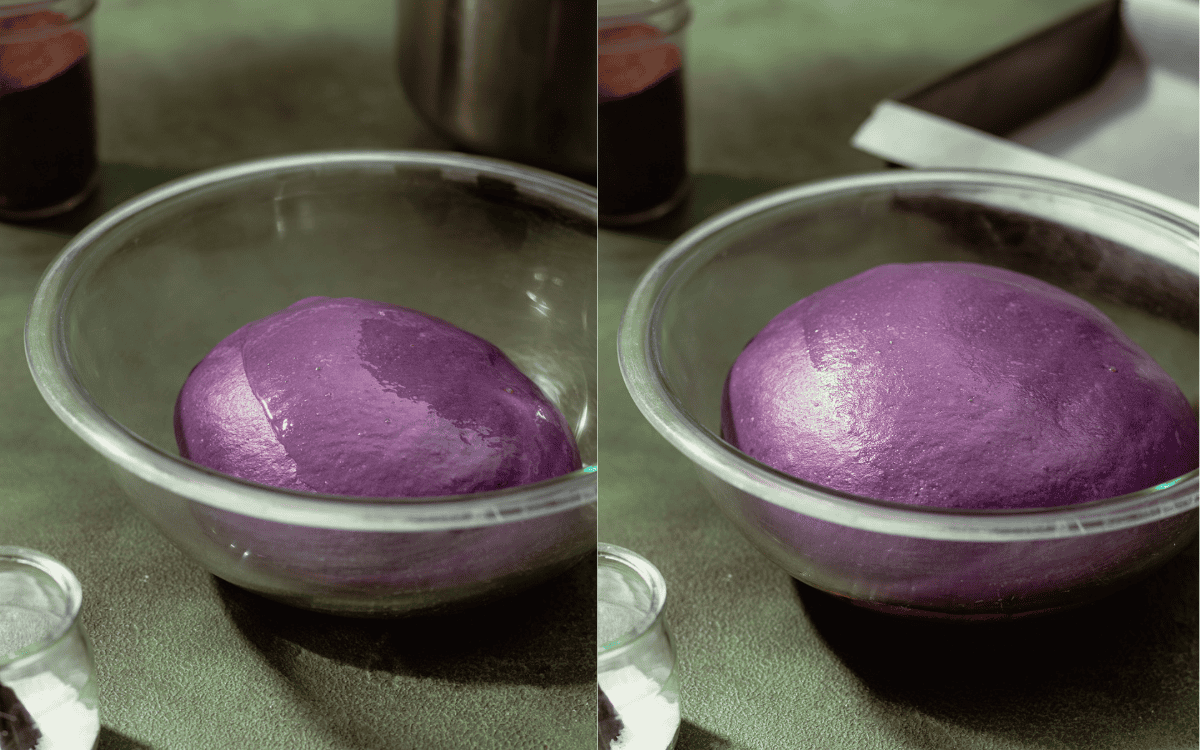
Transfer the dough into a lightly-oiled bowl. Let the dough rise until doubled in volume, about 45 minutes to 1 hour (depending on the temperature of your kitchen).
Shape the rolls
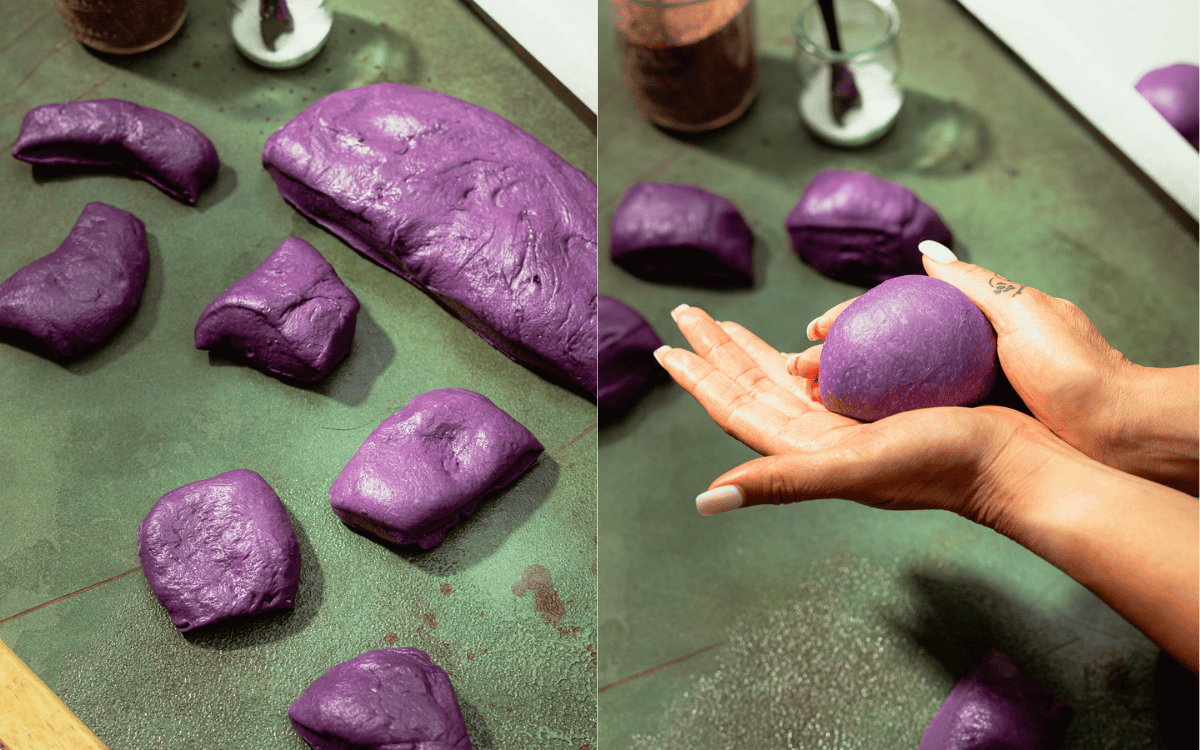
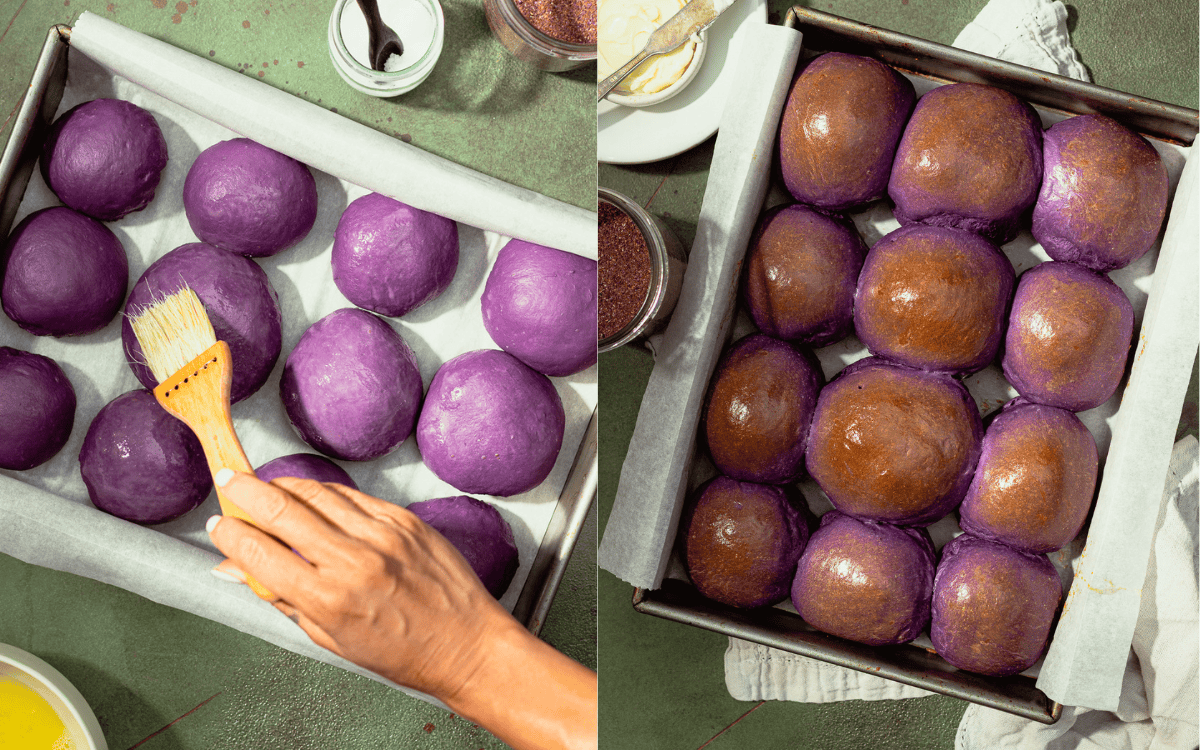
Divide the dough into 12 even portions. Round each piece of dough into a tight ball, pinching the seam at the bottom until completely sealed. Nestle each ball into a parchment lined baking pan (9 by 13 inches).
Let the rolls rise
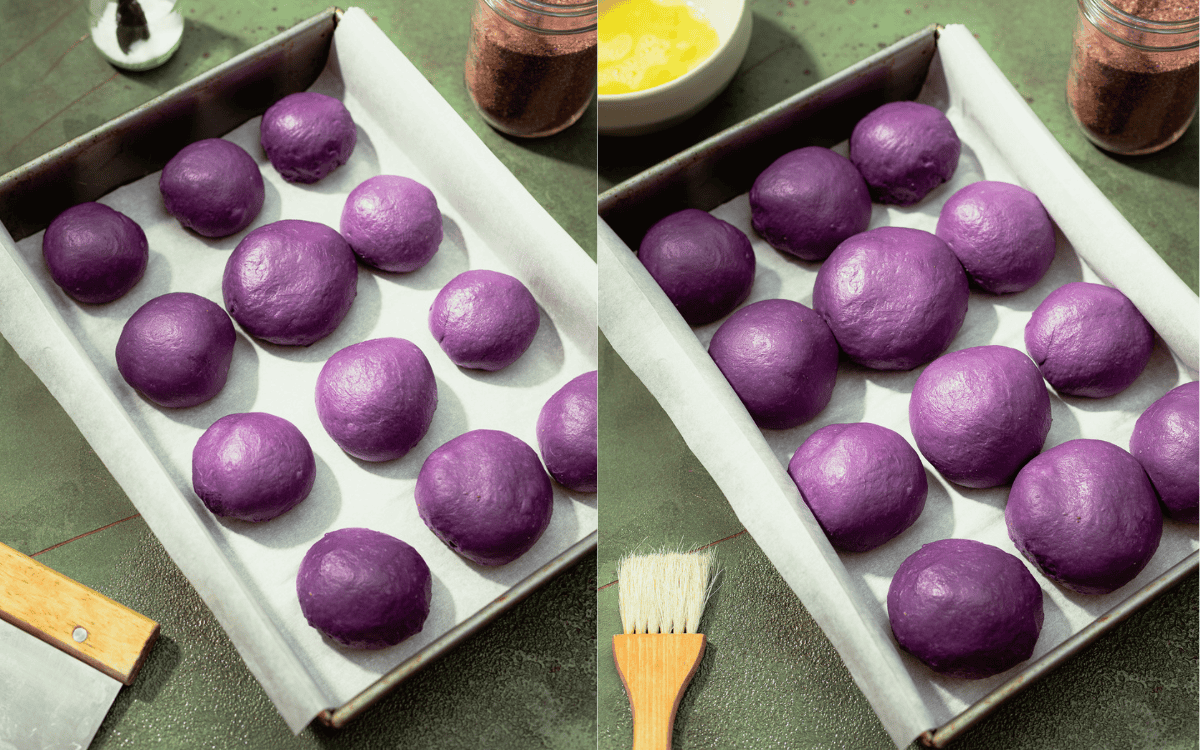
Cover the pan with plastic wrap and let the dough rise until the rolls are puffy and almost touching each other.
Bake the rolls
Brush the top of the rolls with egg wash. Bake the rolls at 350 F for 25 to 30 minutes.
Make-ahead Instructions
Make the halaya up to three days in advance: Prepare the ube halaya ahead of time and store it in an airtight container in the refrigerator.
Proof the rolls overnight: After shaping, arrange the rolls in your baking pan, cover tightly with plastic wrap and refrigerate overnight. After shaping, arrange the rolls in your baking pan, cover tightly with plastic wrap and refrigerate overnight. If the rolls have risen sufficiently and look puffy, you can bake them straight from the fridge. Otherwise, let them finish rising at room temperature until puffy and almost touching before baking.
Freeze the baked rolls: Let the rolls cool completely, then store them in an airtight container or freezer bag for up to 3 months. Thaw the rolls, then reheat them in the oven wrapped in aluminum foil. The foil traps moisture, gently steaming the rolls as they warm and preventing the crust from becoming too hard while keeping the crumb soft and fluffy.
Reheat individual rolls in the microwave: Microwave for 10 to 15 seconds or until warmed through.
Reheat the rolls in the oven: Wrap the rolls in aluminum foil and warm them in the oven at 350 F for 15 to 20 minutes. The foil traps moisture, gently steaming the rolls and preventing the crust from becoming too hard while keeping the crumb soft and fluffy.
Did this recipe rise to the occasion?
★★★★★
Leave a star rating and a comment. Your feedback inspires future recipes and helps others feel confident choosing what to bake next. I read and respond to every message.
If you're looking for additional ways to support my work, share this recipe or buy me a Ko-fi. Every little bit helps me keep creating the recipes and guides you enjoy.
Thank you for your support!
Sourdough Discard Ube Rolls
Equipment
- Ooni Halo Core Mixer
This section may contain affiliate links
Ingredients
Ube halaya
- 10 g ube powder
- 113 g water
- 56 g coconut milk canned
- 42 g unsalted butter
Dough
- 7 g yeast
- 28 g brown sugar
- 169 g coconut milk canned
- 113 g sourdough discard
- 480 g all-purpose flour
- 9 g salt
- 10 g ube extract optional
Egg wash
- 1 egg
Click US Customary to view volume measurements
Instructions
Make the ube halaya
- Combine the ube powder and water in a small saucepan, cover and let the powder rehydrate for at least 15 minutes.10 g ube powder, 113 g water
- Add the coconut milk and bring the mixture to a boil over high heat. Reduce the heat to medium-high and cook, stirring constantly to prevent the bottom from scorching, until thickened. The mixture is ready when it resembles very thick oatmeal. Stir in the butter. You should end up with 150 grams of halaya. (See note)56 g coconut milk, 42 g unsalted butter
- Transfer the mixture to a bowl and let the mixture cool completely. Let the ube halaya cool to room temperature before adding it to the dough. Adding it while it's still hot could kill the yeast and prevent the dough from rising.
Make the ube rolls
- Bloom the yeast: While the halaya cools, whisk the brown sugar, coconut milk and yeast in the bowl of your stand mixer. Cover and let the yeast activate for 15 minutes until fragrant and foamy.7 g yeast, 28 g brown sugar, 169 g coconut milk
- Make the dough: Add the remaining ingredients, including the cooled ube halaya, to the yeast mixture. Mix on low speed using the dough hook until a shaggy dough forms. Gradually increase the speed to medium and continue mixing until the dough is smooth and pliable.113 g sourdough discard, 480 g all-purpose flour, 10 g ube extract, 9 g salt
- Proof the dough: Round the dough into a tight ball and transfer it to a lightly-oiled bowl. Cover with plastic wrap and let the dough rise until doubled in volume, about 45 minutes to 1 hour, depending on the temperature of your kitchen.
- Prep: Line a large metal baking pan (9 by 13 inches) with parchment paper.
- Shape the dough: Divide the dough into 12 portions. Round each piece of dough into a tight ball. Turn the dough over and pinch to seal the seam. Arrange the dough into the prepared pan.
- Proof the rolls: Cover the pan with plastic wrap and let the dough rise until puffy and almost touching each other.
- While the rolls proof, preheat the oven to 350 F.
- Brush with egg wash: Whisk the egg to break up the yolk. Brush the top of the rolls with egg wash using a pastry brush.
- Bake the rolls: Bake the rolls for 25 to 30 minutes or until the tops are browned and the center of the rolls measure at least 190 F when probed with an instant-read thermometer.1 egg
Enjoy and store
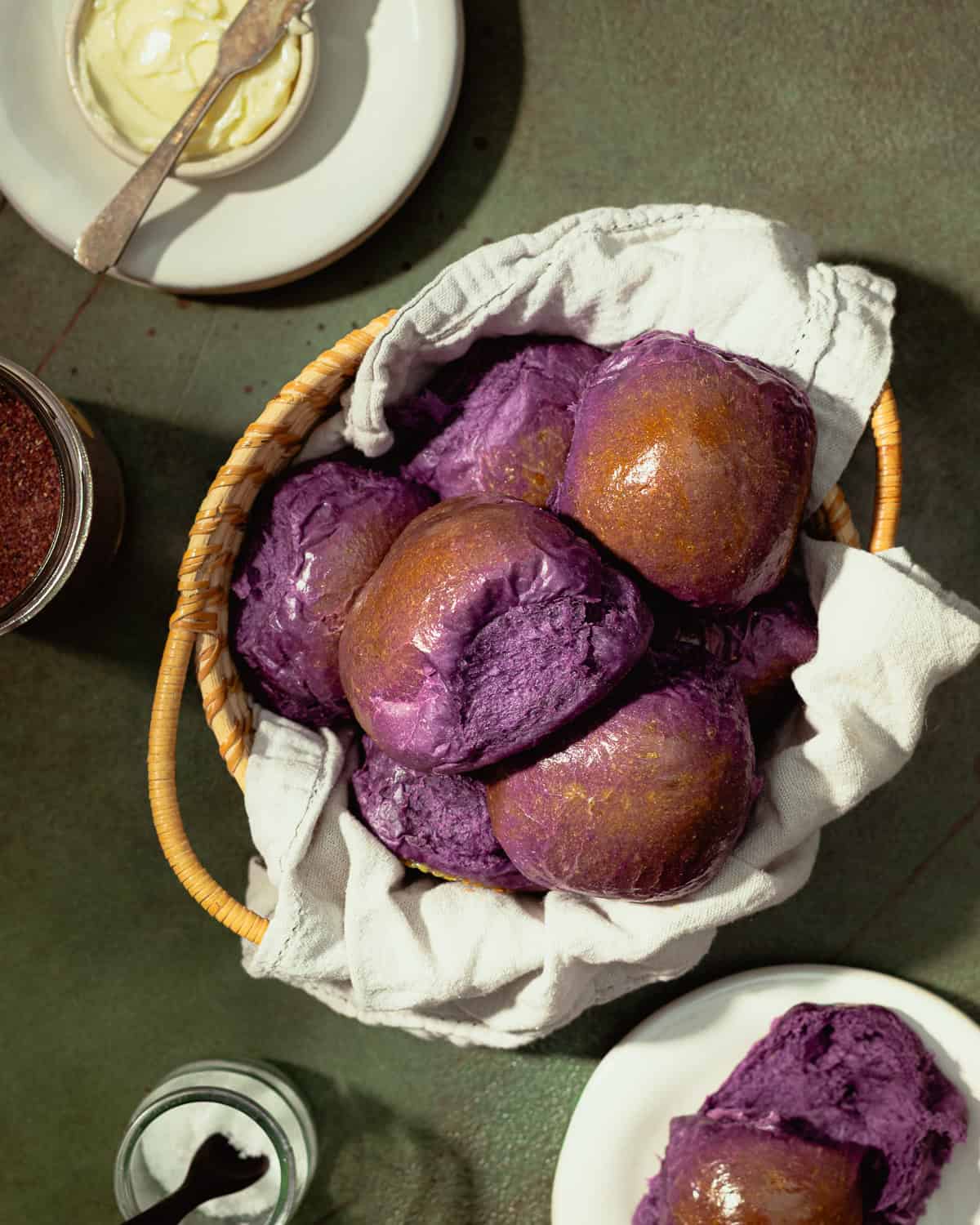
- Transfer the rolls to a wire rack and let them cool slightly before serving. These rolls are delicious on their own or slathered in butter.
- Store any leftover rolls at room temperature in an airtight container for up to 3 days. Alternatively, freeze the rolls for up to 3 months.
Tips
These recipes were developed and tested using grams for precise measurements. To increase your chances of success, I recommend investing in a kitchen scale. I've included rough volume estimates (in tablespoons and cups), but they might not be totally accurate.
Remember all ovens are unique, these recipes were tested in my oven which runs cooler than others. You might need to lower the temperature if your bake appears to be browning too quickly. Monitor your bake closely and make adjustments if needed.
Notes
- Traditional ube halaya is quite sweet and usually made with condensed milk. This is not a traditional halaya, as I've left out the sugar to keep the rolls from becoming too sweet.
- If you don't want to make your own ube halaya, you can substitute 150 grams of store-bought ube jam.
- Ube extract is optional but highly recommended if you want your rolls to have a vibrant purple hue.
Nutrition
I am not a nutritionist or dietitian, any nutrition information provided is an estimate.


Did you make this recipe? Do you have questions? Let me know below!