

These Sourdough Cheddar Scallion Biscuits are tender, airy, and full of buttery, flaky layers. Made with sourdough discard, they're cheesy, herby, and a savory way to put your excess sourdough to good use. Sharp cheddar and fresh scallions give them big flavor, and I love serving a big basket for Thanksgiving, a summer bbq or any time as a special treat to share.

If you've ever wondered how to use starter beyond sourdough bread, this is one of my favorite ways. Like my sourdough discard focaccia and sourdough pasta, these biscuits prove starter isn't just for loaves or sweets. The sourdough discard adds depth without any extra effort, making these a great way to satisfy those savory cravings while cutting down on food waste.
The best part? You can have fresh, cheesy biscuits on the table in about 30 minutes. They're quick enough for weeknights, special enough for a big holiday spread alongside with sourdough cornbread and sourdough pumpkin pie. Once you try them, you'll want to keep this recipe in your regular rotation.

5-STAR REVIEW
INSANE!!!! Loved them
Olivia
What You Need
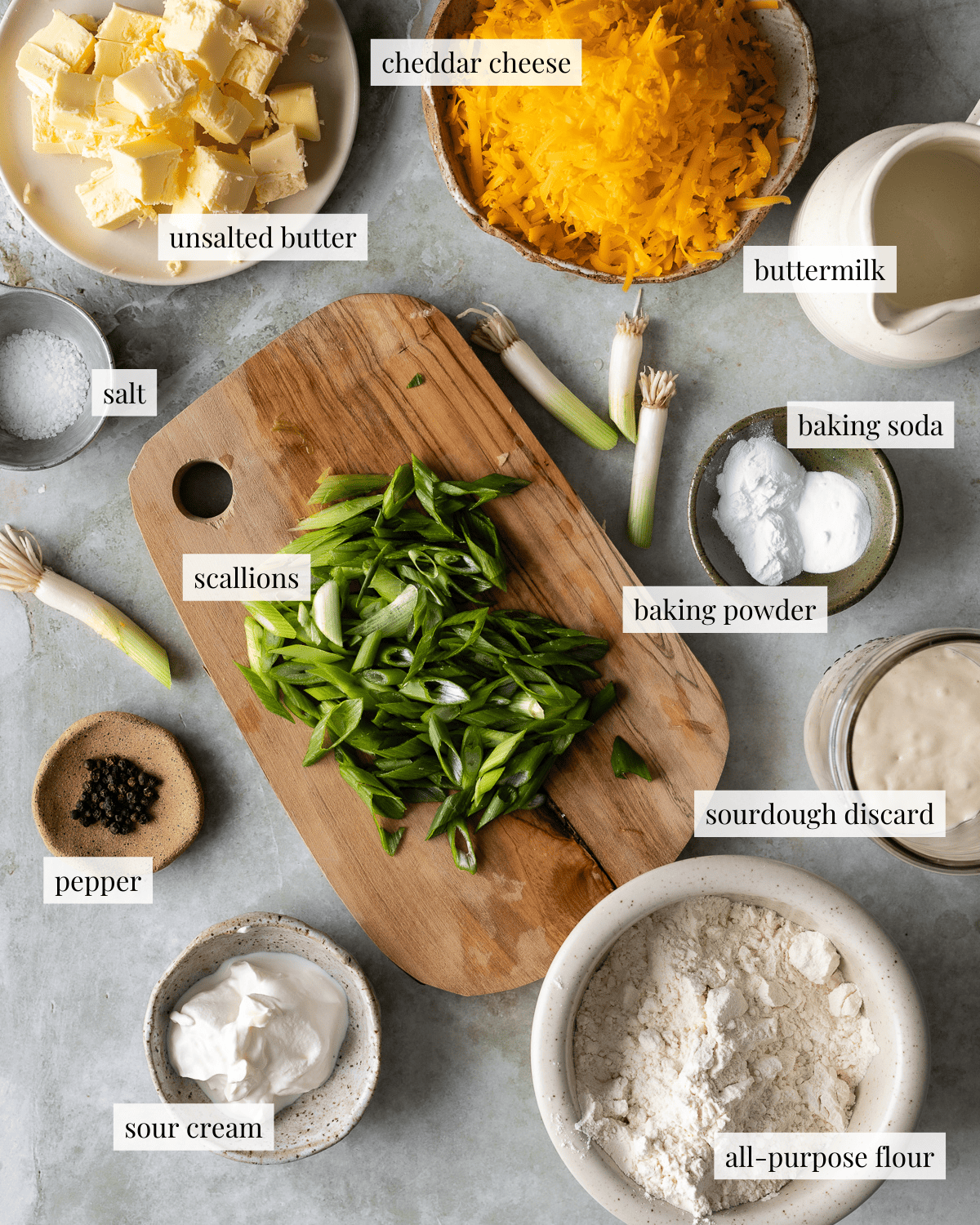
All-Purpose Flour: The low protein content of all-purpose keeps the texture of these biscuits light, do not substitute another whole wheat flour for this recipe or your biscuits will be heavy and dense.
Sourdough Discard: You can use sourdough discard or active sourdough starter for this recipe. If you don't have starter on hand, just add 56 grams of water and 56 grams of flour to your dough.
Sour Cream: If you don't have sour cream on hand, you can easily substitute with plain yogurt, or use a plant-based yogurt.
Buttermilk: The acidity of buttermilk works with the baking powder and baking soda to help these biscuits become even softer and fluffier, substitute milk and add ¼ teaspoon of apple cider vinegar to the recipe if you don't have any on hand.
Scallions: Use only the tender green parts of your scallions, substitute chives or finely diced shallots.
See the recipe card for detailed ingredient information.
Step-by-step Instructions
STEP 1: Make the dough
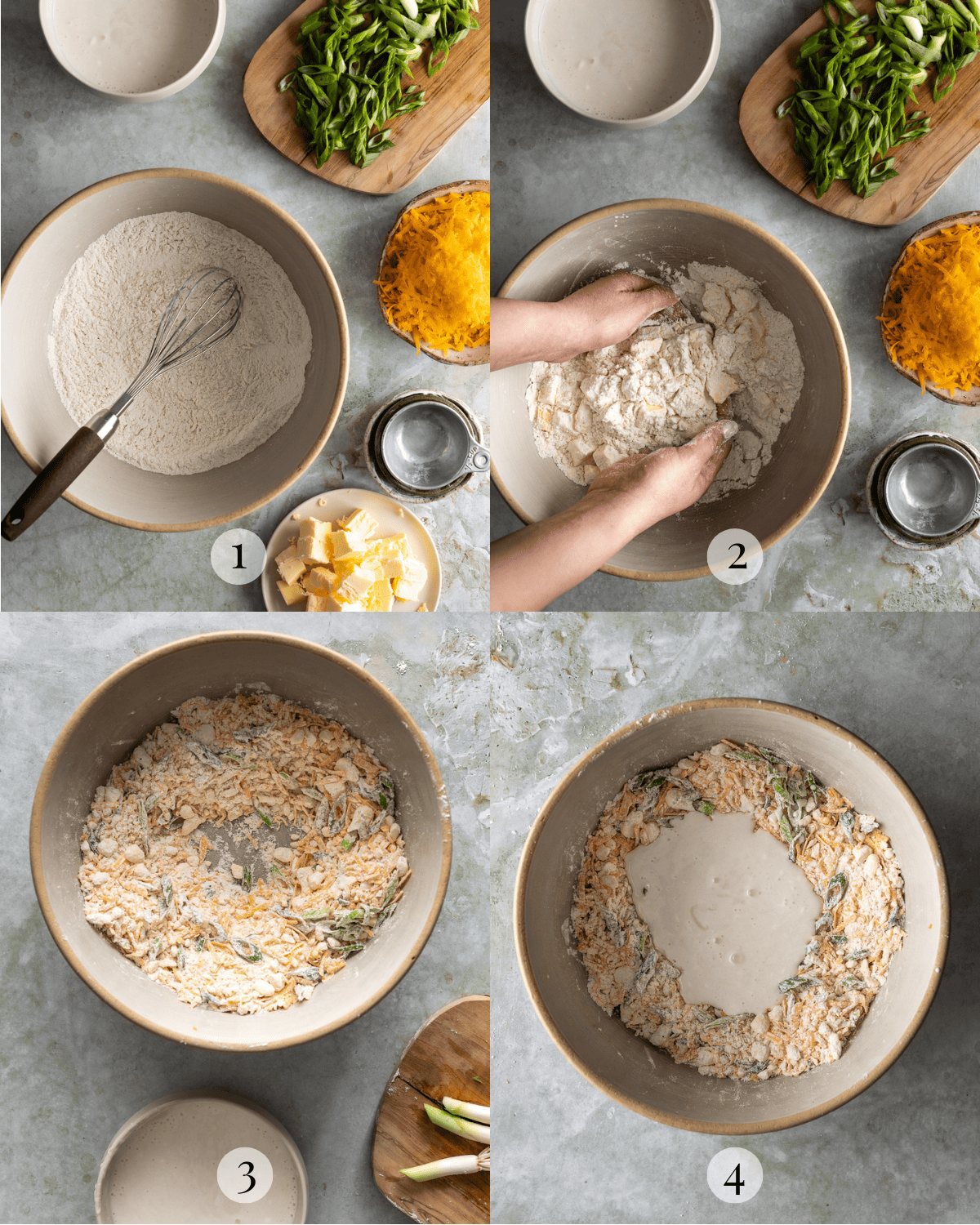
Whisk the dry ingredients together (image 1). Rub the butter into the flour (image 2). Toss the cheese and scallions into the flour mixture (image 3). Make a well and pour the sourdough discard and water in the center (image 4). Stir the ingredients together and knead gently until the dough clumps together.
STEP 2: Laminate the dough
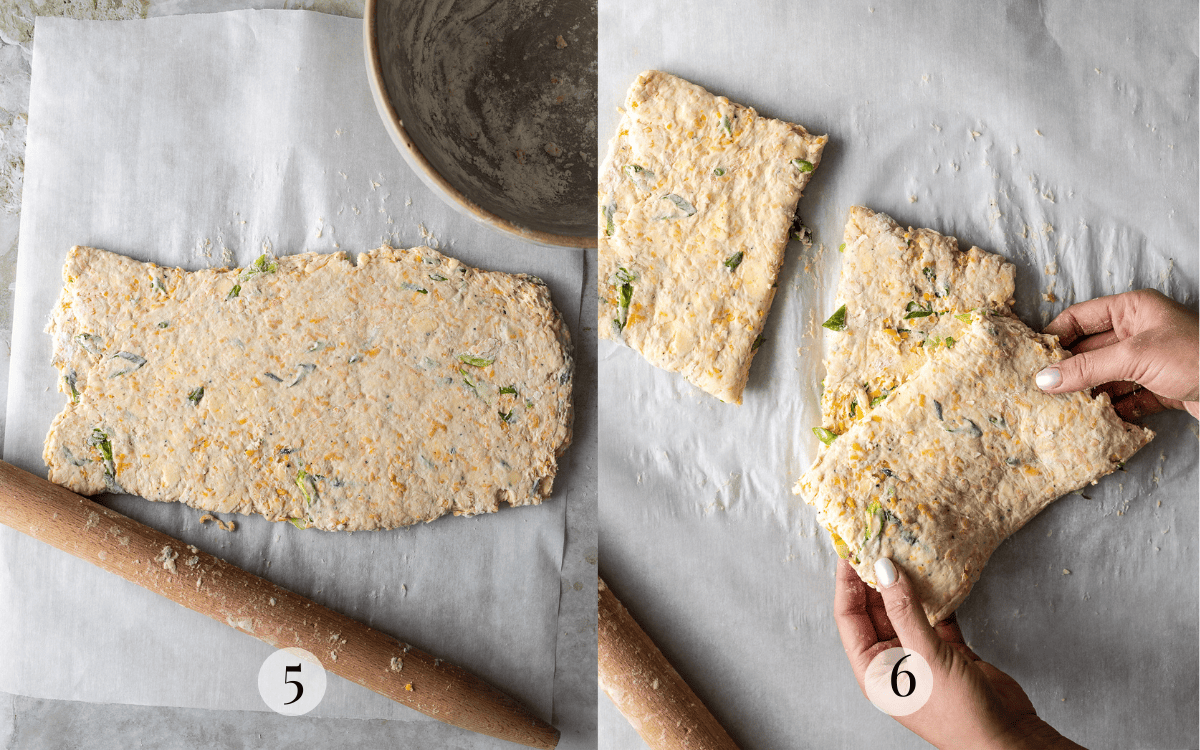
Roll the dough into a 4 by 12 inch rectangle, the size doesn't have to be exact (image 5). Divide the dough into 3 portions and stack the dough (image 6).
STEP 3: Shape and Bake
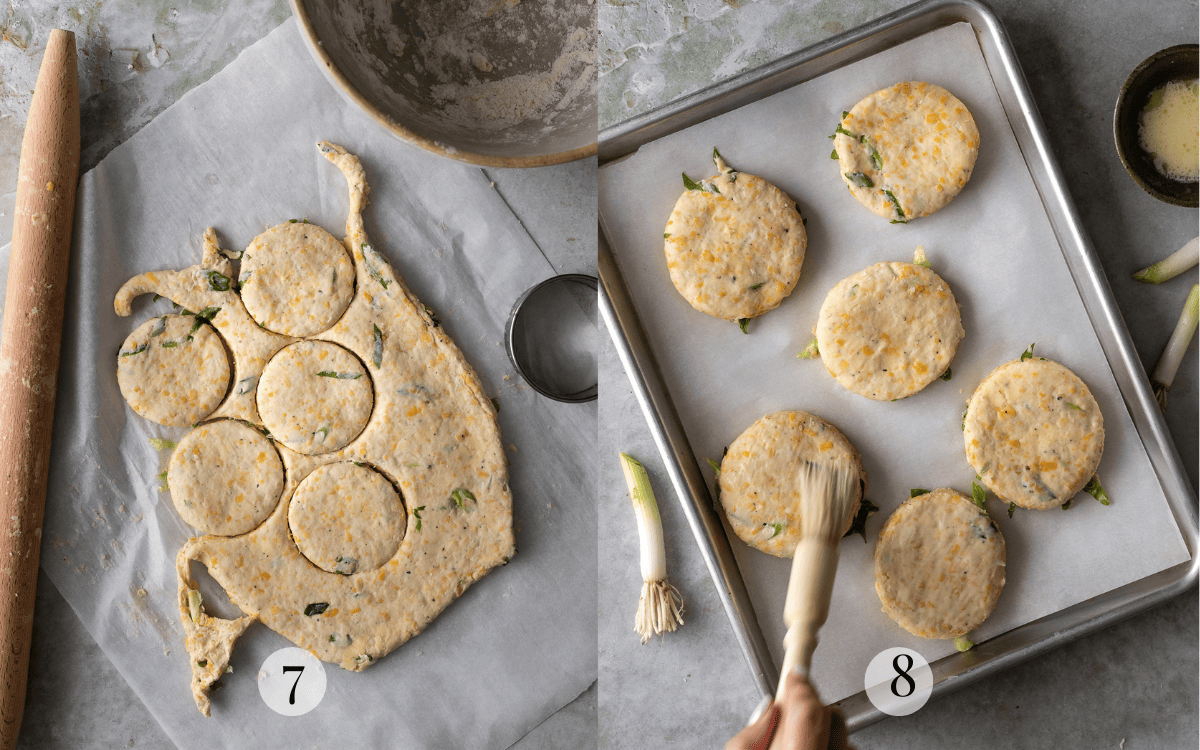
Roll the dough into a large 8 by 11-inch rectangle, about 1-inch thick. 3 ½-inch biscuit cutter to cut 6 rounds (image 7). Brush melted butter and buttermilk on top of the dough (image 8). Bake at 425 for 15 to 20 minutes or until golden brown.
Notes from Hannah's Test Kitchen
- Make sure you knead your dough just enough until all the flour is hydrated. Dry, floury spots will bake up into dense and gummy areas on your biscuits.
- If the butter in your dough begins to melt, don't be afraid to wrap it up and refrigerate for a few minutes to let the butter solidify.
- Laminating the dough creates alternating layers of butter and dough, the fat creates a barrier which prevents excessive gluten development. This contributes to the formation of flaky layers and a tender texture.
- Lightly re-roll the excess dough and cut 6 more portions. You should end up with 12 biscuits.
Make Ahead Tips
These biscuits are a fantastic make-ahead side dish, whether you're pulling together a weeknight dinner or planning a big holiday meal like Thanksgiving when time is scarce and oven space is limited. Planning ahead means you can enjoy fresh, flaky biscuits on the table without adding stress to your cooking schedule.
Freeze the dough:
- Mix and cut your biscuits the night before and place them on a parchment-lined baking sheet.
- Place the baking sheet in the freezer for at least 2 hours.
- Transfer frozen biscuits to a zip-lock bag.
- Store for up to 2 weeks. Beyond that, the chemical leaveners may begin to lose effectiveness and the biscuits may not reheat as fluffy.
- Bake straight from the freezer, adding 5 to 10 minutes to the bake time.
Bake ahead
- Bake your biscuits as directed and let them cool completely.
- Wrap biscuits tightly in foil.
- Place wrapped biscuits in a freezer-safe bag and store for up to 1 month.
- Reheat biscuits wrapped in foil at 350°F for 15 to 20 minutes, until warmed through.

Did this recipe rise to the occasion?
★★★★★
Leave a star rating and a comment. Your feedback inspires future recipes and helps others feel confident choosing what to bake next. I read and respond to every message.
If you're looking for additional ways to support my work, share this recipe or buy me a Ko-fi. Every little bit helps me keep creating the recipes and guides you enjoy.
Thank you for your support!

Cheddar Scallion Sourdough Biscuit Recipe
Equipment
- whisk
This section may contain affiliate links
Ingredients
Dough
- 240 grams all-purpose flour
- ½ teaspoon black pepper freshly-ground
- 5 grams salt
- 4 grams baking soda
- 6 grams baking powder
- 113 grams sourdough discard
- 56 grams sour cream
- 113 grams buttermilk
- 113 grams unsalted butter cold and cut into ½-inch cubes
- 113 grams sharp cheddar cheese grated
- 4 scallions
Milk Wash
- 14 grams unsalted butter melted
- 14 grams buttermilk
Click US Customary to view volume measurements
Instructions
- Mix the dry ingredients: Whisk together the all-purpose flour, ground black pepper, salt, baking soda and baking powder until fully incorporated. Set aside.240 grams all-purpose flour, ½ teaspoon black pepper, 5 grams salt, 4 grams baking soda, 6 grams baking powder
- Add the butter: Toss the butter into the flour mixture. Squeeze the butter using your fingertips and rub the mixture together until all the flour has been coated and you end up with pea-sized pieces and breadcrumb pieces.113 grams unsalted butter
- Make the dough: Toss the grated cheese and scallions into the flour mixture until evenly distributed. Make a well in the center of the mixture.113 grams sharp cheddar cheese, 4 scallions
- Mix ithe wet ingredients in: Pour the wet ingredients in the well. Stir the mixture until well incorporated.113 grams sourdough discard, 56 grams sour cream, 113 grams buttermilk
- Knead the dough: Knead 3 or 4 times until the mixture comes together into a cohesive dough.
- Laminate the dough: Transfer the dough on a piece of parchment paper or a lightly floured work surface. Using a rolling pin, roll the dough into a 4 by 12-inch rectangle. Divide the dough into thirds, stack the portions. Flatten the dough out once more into a 1-inch thick rectangle (about 8 by 10-inches you don't have to be exact).
- Chill the dough: Transfer the dough to a parchment-lined baking sheet, cover the baking sheet with plastic wrap and refrigerate.
- Prep: As your dough chills, preheat your oven to 425 F. Line a large baking sheet with parchment paper.
- Shape: Take the dough out of the refrigerator. Dip a 3-inch biscuit cutter into flour and cut 6 rounds out of the dough. Do not twist the cutter or you'll seal the edges and you won't have the flaky layers. Place the dough portions on your prepared baking sheet.
- Reroll the remaining dough. Flatten the dough into a ¼-inch thick rectangle once more. Cut 5 to 6 portions out of the dough. Place the dough on your baking sheet.
- Stagger the dough portions at least an inch apart.
- Bake: Whisk the melted butter and buttermilk together. Brush the tops of the dough with the milk wash. Bake at 425 for 15 to 20 minutes or until golden brown.14 grams unsalted butter, 14 grams buttermilk
- Enjoy and store: Transfer the baked biscuits to a wire rack. These biscuits are best enjoyed freshly baked. Store any leftover biscuits in an airtight container at room temperature for up to 3 days.
- Reheat on stove stop: Heat a dry frying pan over medium-high heat, split a biscuit in half, and fry the biscuits cut-side up for 5 to 10 minutes or until they are heated through Reheat in the oven: Heat them on a parchment-lined baking sheet at 350 for 15 minutes.
Tips
These recipes were developed and tested using grams for precise measurements. To increase your chances of success, I recommend investing in a kitchen scale. I've included rough volume estimates (in tablespoons and cups), but they might not be totally accurate.
Remember all ovens are unique, these recipes were tested in my oven which runs cooler than others. You might need to lower the temperature if your bake appears to be browning too quickly. Monitor your bake closely and make adjustments if needed.
Notes
If your dough feels too wet, dust your work surface with a little bit of flour and knead until it feels more manageable.
Recipe Video
Nutrition
I am not a nutritionist or dietitian, any nutrition information provided is an estimate.



Olivia says
INSANE!!!! Loved them
Hannah Dela Cruz says
So glad you loved it!