

If you love roasted sweet potatoes with butter, you'll want to try this Sourdough Discard Sweet Potato Butter Focaccia. Mashed sweet potato brings a natural earthy sweetness, and a beautiful golden color to the crumb, while sourdough discard brings depth and character. The dough is easy to mix by hand (no mixer needed) and you can bake it the same day or make it ahead. It's simple enough for everyday baking, but special enough for a spot on your holiday menu.
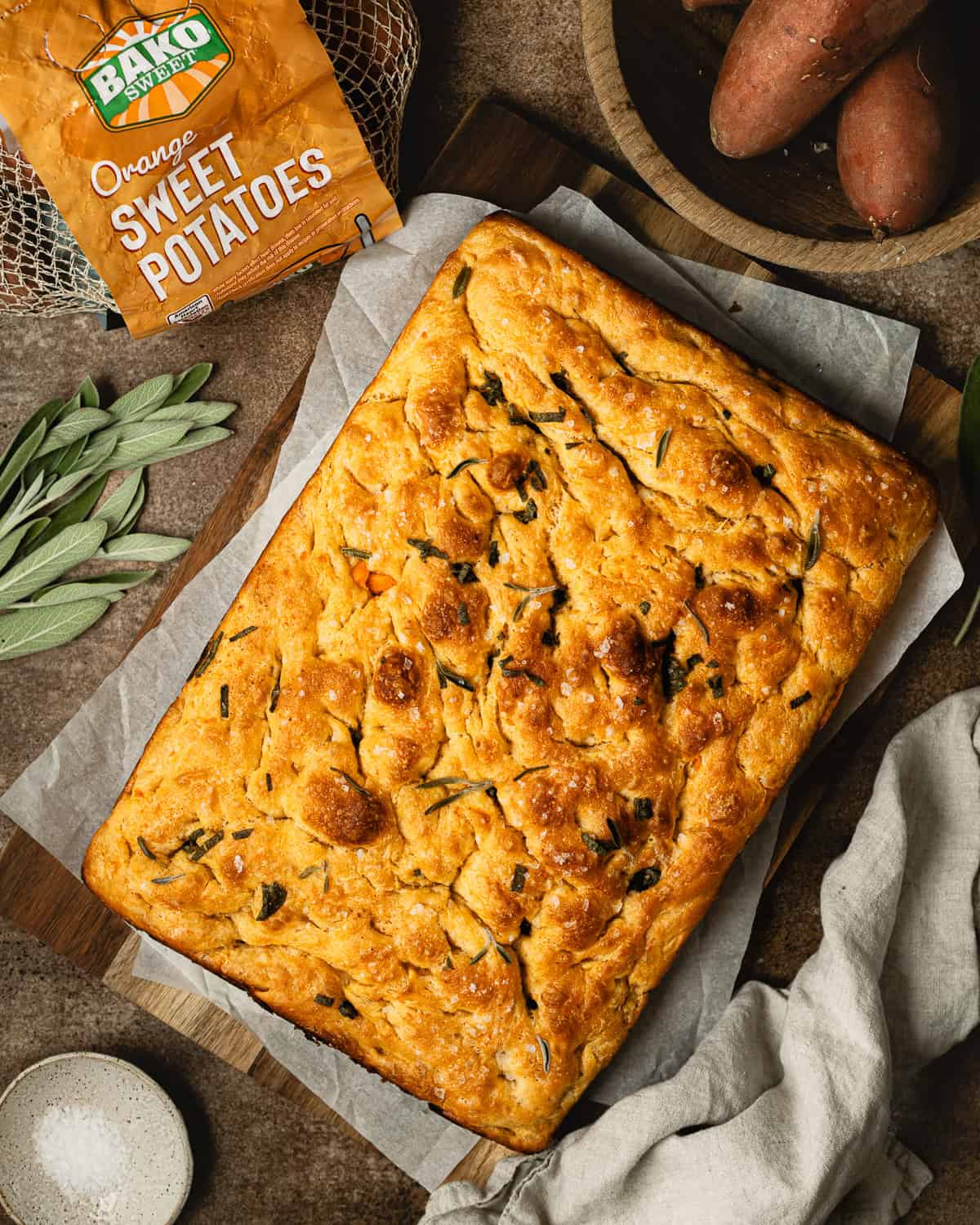
Sponsored by Bako Sweet: I'm truly grateful for your support of the brands that help make Make It Dough possible. I want to assure you that all the recommendations and opinions expressed are my own.
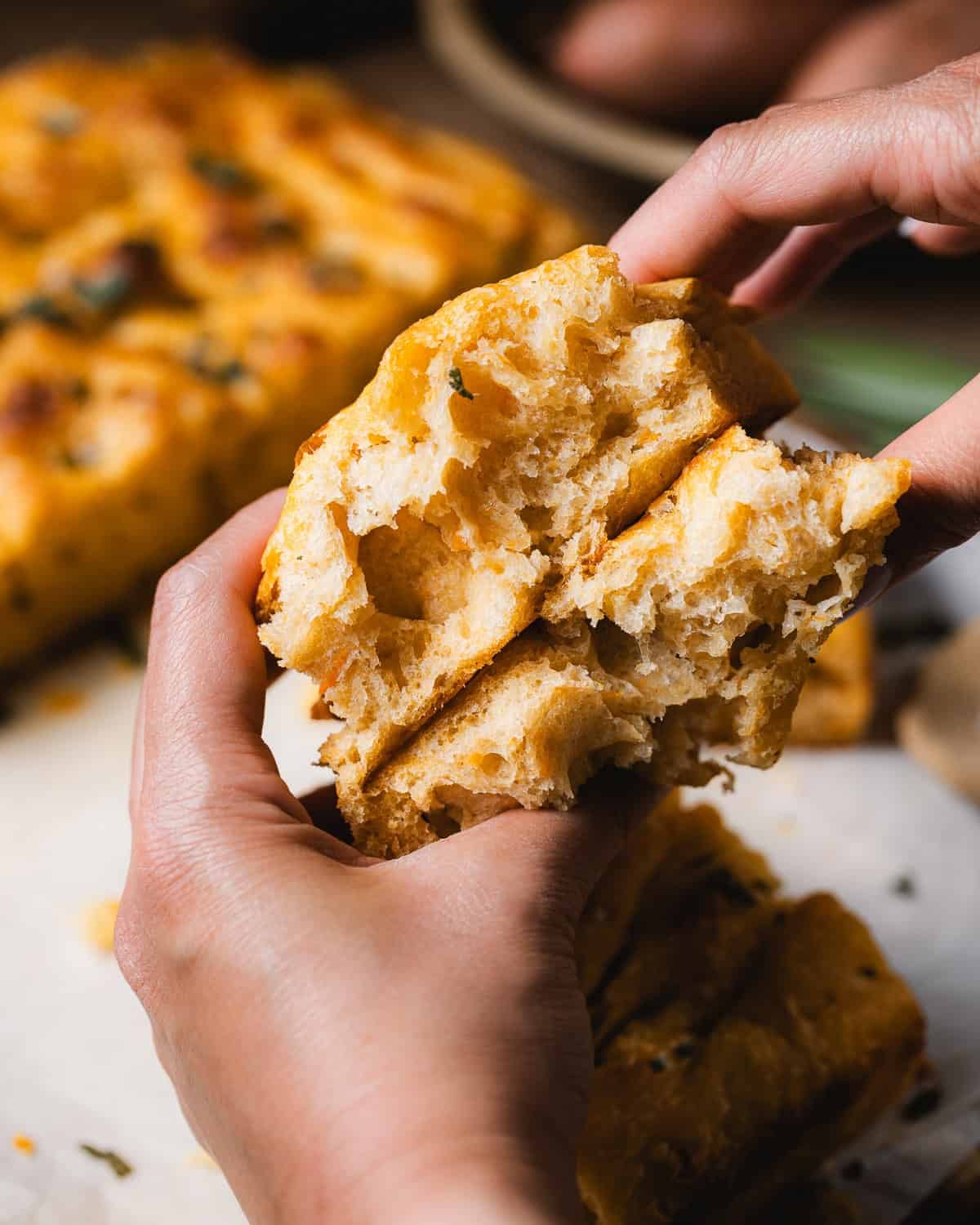
Sweet potatoes add more than just color, they make this focaccia soft, rich, and slightly sweet. Their natural starch keeps the crumb tender and moist, even days after baking. If you've been following my blog for a while, you know how much I love baking and cooking with them. I've used sweet potatoes in cinnamon swirl bread, sandwich loaves, cakes and even homemade biscuits. Roasting them deepens their flavor without adding excess moisture, making them a perfect ingredient for doughs and batters.
I adapted the viral sourdough croissant bread and added frozen butter to the focaccia dough. It makes the crumb airy and incredibly soft, while the crust turns delicately flaky, almost like a pastry.
Ingredients and Substitutions
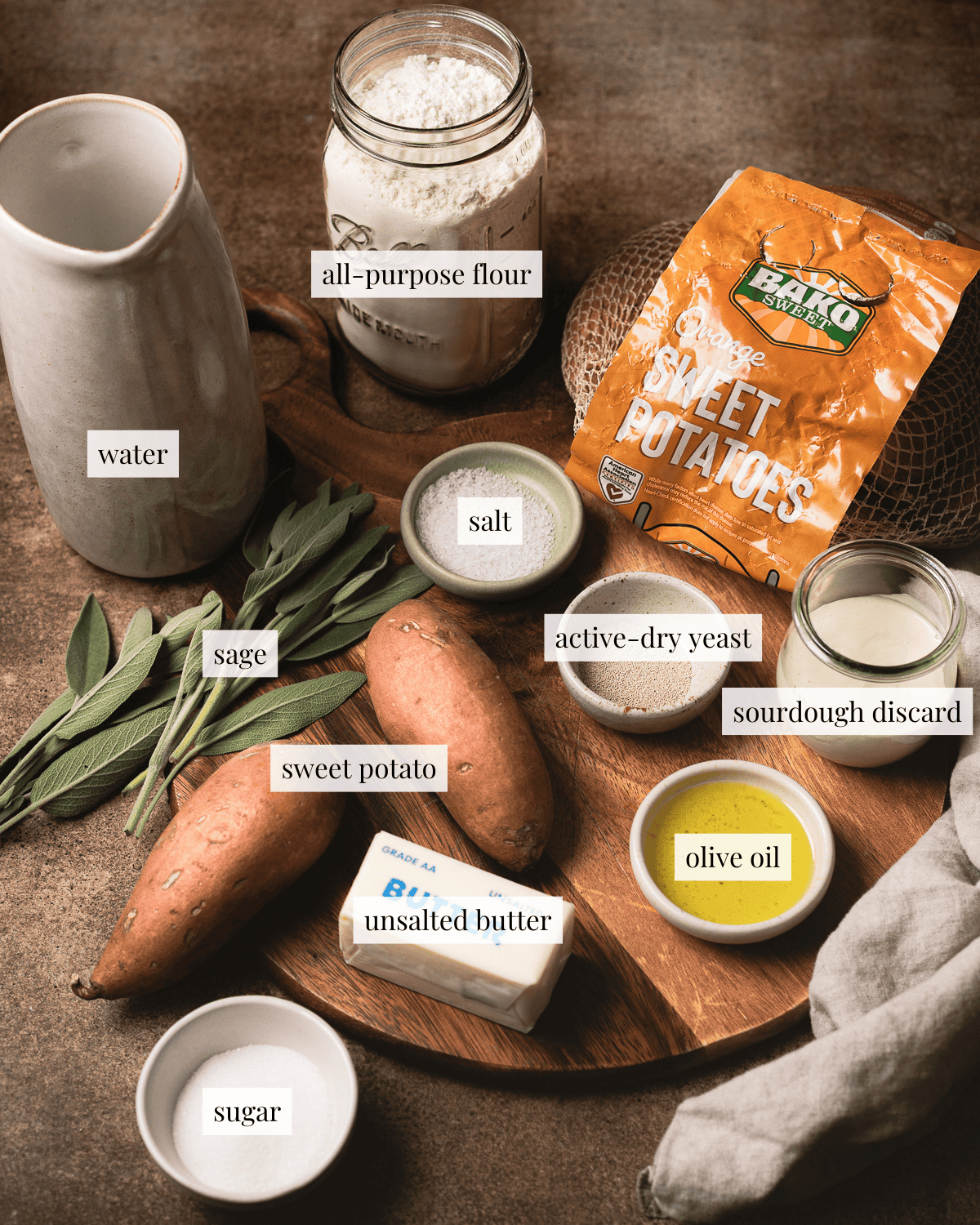
A hybrid dough made with sourdough discard and active dry yeast gives this focaccia the best of both worlds: a faster rise and a deep, complex flavor. You can also use instant yeast, throw it right in with the remaining ingredients and skip the blooming step.
The star of this recipe is the roasted sweet potato from Bako Sweet! I used orange sweet potatoes, but Japanese or even purple sweet potatoes work just as well.
Both active sourdough starter and sourdough discard work for this recipe. If you don't have a sourdough starter, add 56 grams flour and 56 grams water to your dough.
Using butter instead of olive oil makes this recipe unique. Instead of a soft, spongy crumb of my traditional sourdough discard focaccia, it bakes up with a crisp crust and a light, flaky interior. You'll need one stick of butter, half is grated while frozen and mixed into the dough, and the other half is melted with sage and brushed on top before and after baking.
I used fresh sage for the topping, but you can use dried, just use about half the amount. You can also try other herbs like rosemary or thyme, or switch things up with a sweet version topped with cinnamon sugar, dried fruit, and nuts.
See recipe card for detailed ingredient information.

Can I make this recipe with an active sourdough starter?
Absolutely! However, you'll need to adjust the fermentation time for the dough. The dough will take about 4 to 6 hours to rise during bulk fermentation.
If you don't want to use commercial yeast, just omit it and replace the sourdough discard with an equal amount of active sourdough starter.
Step-by-step Instructions
Prep
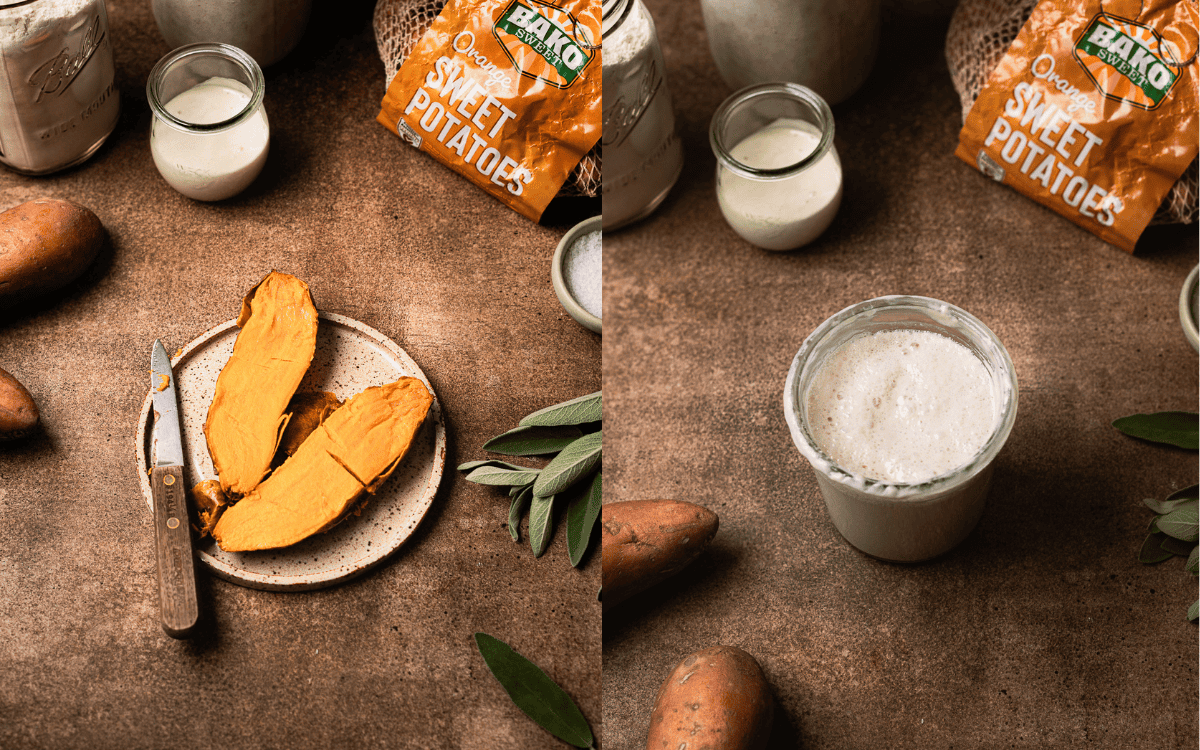
Roast the sweet potato at 425°F for about 1 hour, or until it's completely tender and there's no resistance when pierced with a paring knife. Bloom the yeast in warm water with a bit of sugar.
Make the dough
Add the cooled, mashed sweet potato and remaining ingredients (except butter) into the yeast mixture. Stir until a cohesive dough forms. Complete 1 set of stretch and folds.
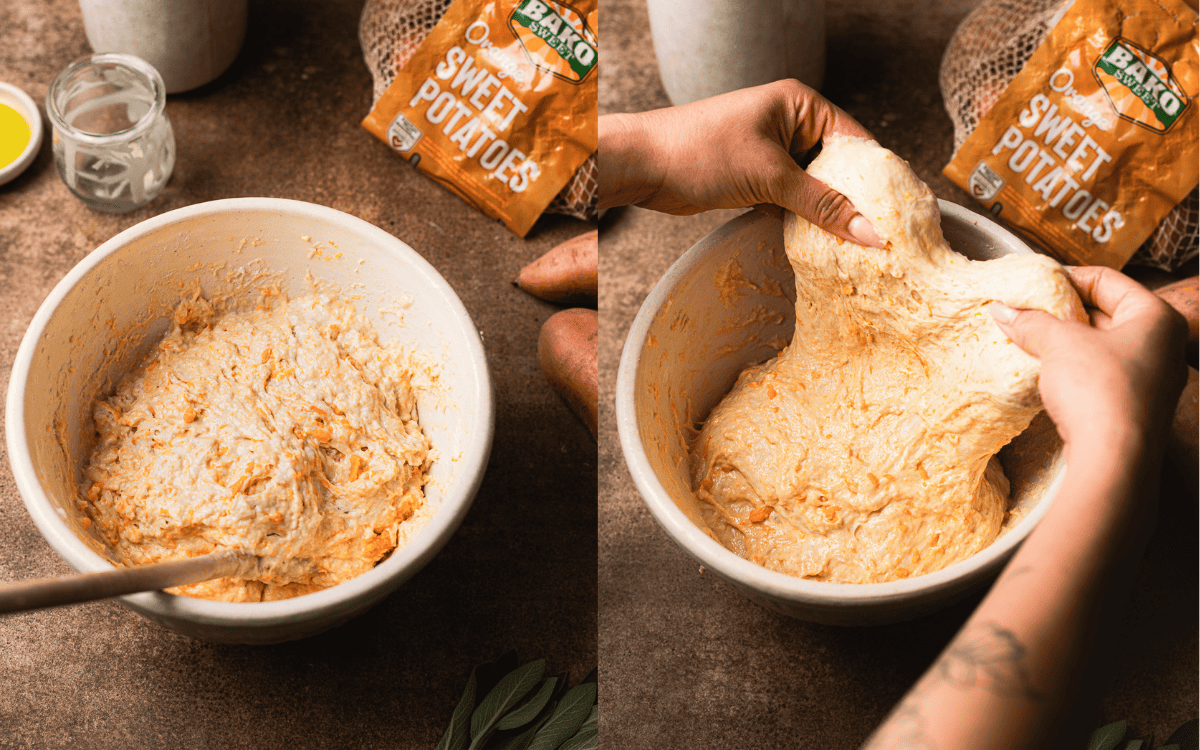
How to stretch and fold
This dough is quite wet and sticky, so use the stretch and fold method instead of kneading:
- Let the dough rest for 15 minutes.
- Grab one side and gently stretch it up before folding it over the center.
- Rotate the bowl a quarter turn and repeat on the next side.
- Continue until you've stretched and folded all four sides.
- Cover and let the dough rest for another 15 minutes.
TIP: I like to lightly oil my hands or wet them with a little water when handling wet dough, it helps keep the dough from sticking too much.
Add frozen butter
During the second fold, sprinkle about ¼ of the grated frozen butter over the dough, then fold the dough over. Repeat with the remaining butter during each fold until it's all incorporated.
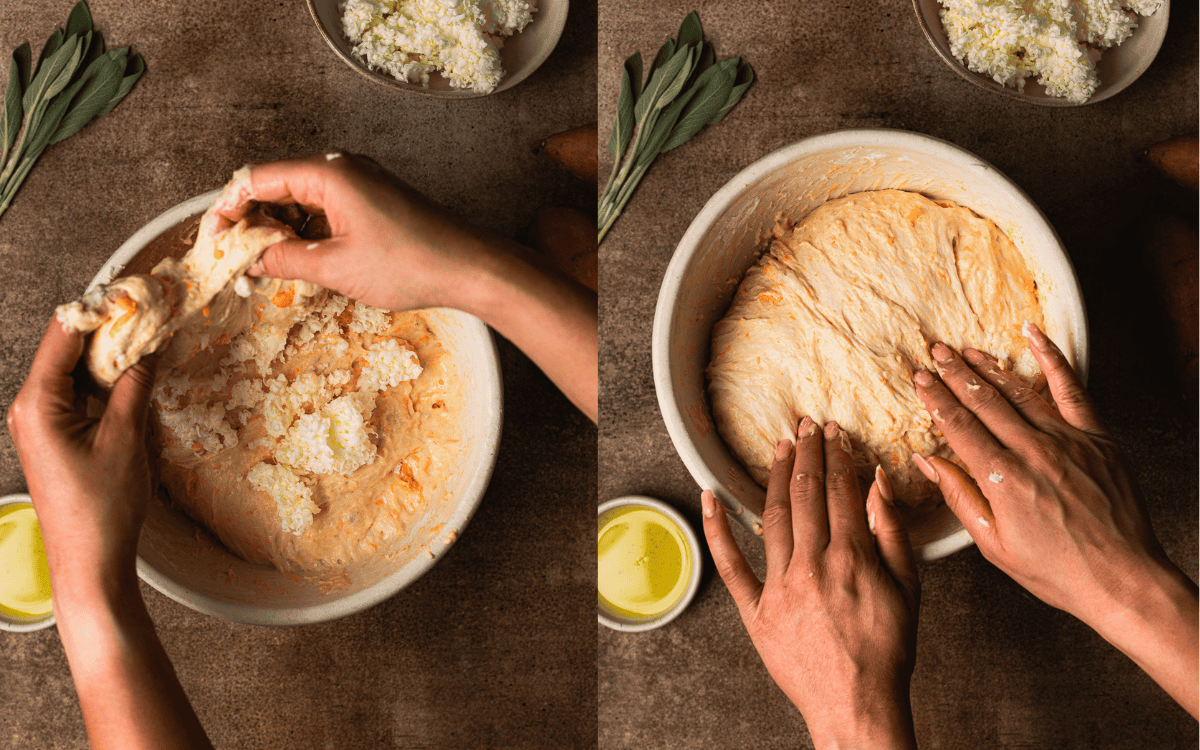
Final proof
Transfer the dough to a heavily oiled pan lined with parchment paper. Cover with plastic wrap and let the dough rise until doubled in volume.
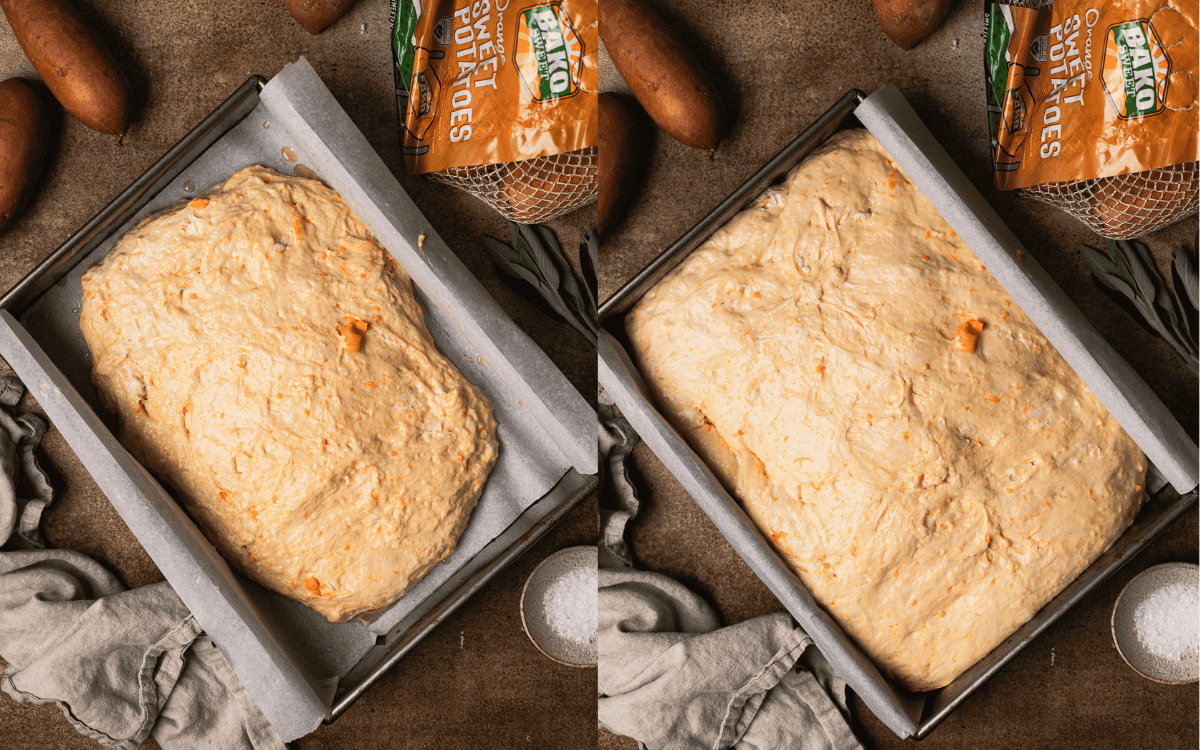
Add topping
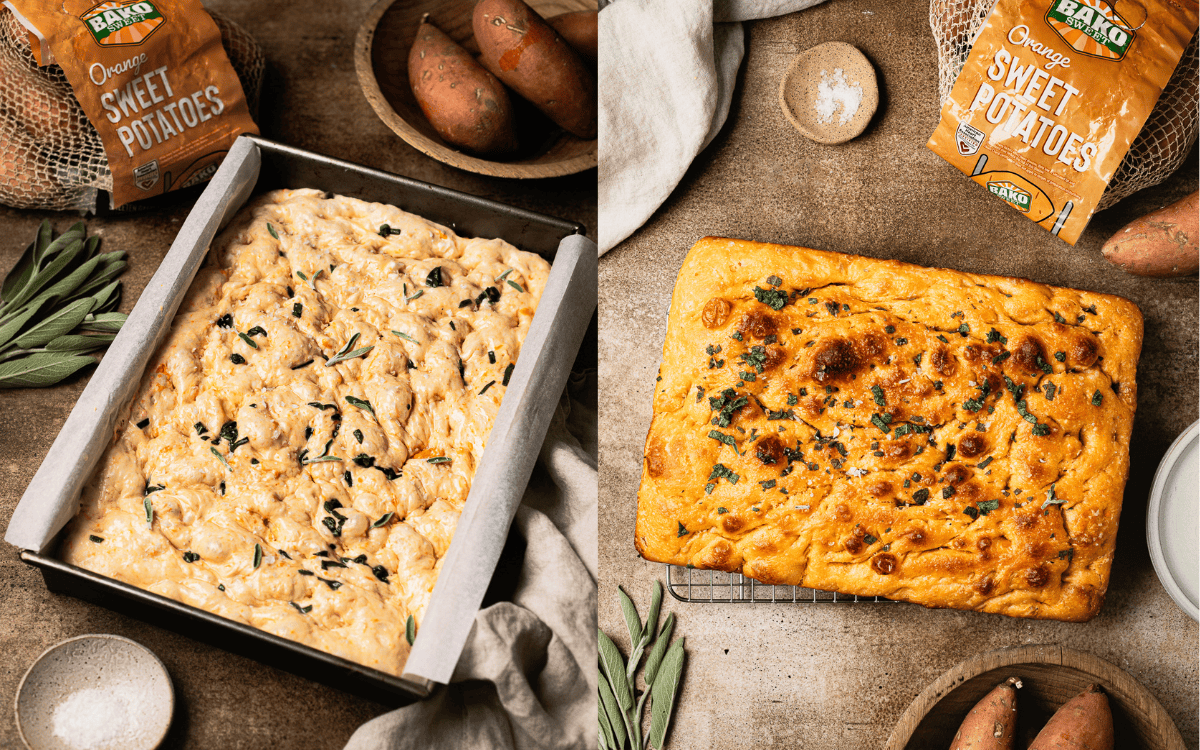
Melt the butter in a pan over medium heat, add the chopped sage and cook for 1 minute. Pour the sage butter on top of the dough and sprinkle flaky sea salt on top. Use your fingertips to gently press and dimple the surface of the dough. This creates deep crags that help catch the butter and give the focaccia its signature texture.
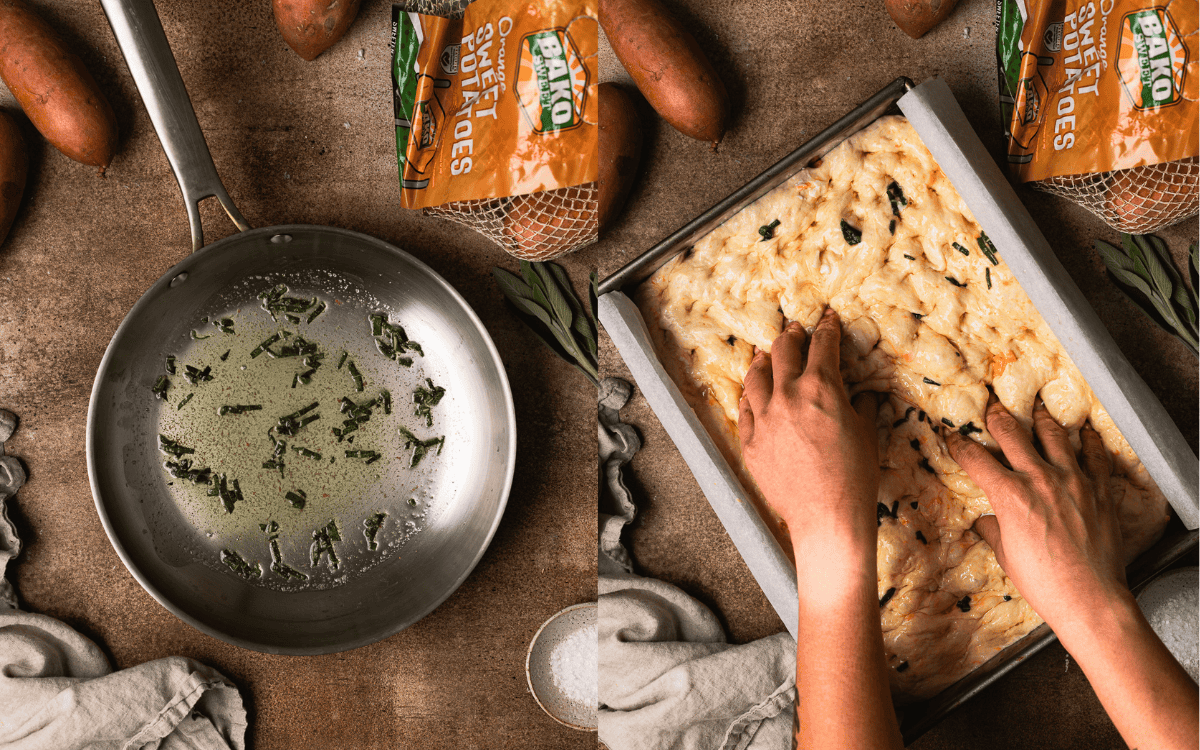
Bake
Bake at 400 F for 30 to 45 minutes depending on how crisp you want your focaccia.
Tips from Hannah's Test Kitchen
- This recipe is a great way to use up sourdough discard, especially if you're still in the process of growing your first starter!
- I like to roast my sweet potatoes a day in advance. Adding hot sweet potatoes to the dough will kill your yeast and prevent your dough from rising. This is also a great way to use leftover sweet potatoes!
- I'll be giving time cues throughout this recipe, but think of them as a guide rather than a rule. Proofing can take more or less time depending on the temperature and your environment, so always pay attention to how the dough looks and feels.

Make Ahead Instructions
You can make the dough up to 1 day ahead. Transfer it to your prepared pan, refrigerate overnight, then bake as directed.
The baked bread also freezes well. Simply slice it and store in a zip-top bag for up to 1 month. Reheat in the air fryer or bake at 350°F until warmed through.
Did this recipe rise to the occasion?
★★★★★
Leave a star rating and a comment. Your feedback inspires future recipes and helps others feel confident choosing what to bake next. I read and respond to every message.
If you're looking for additional ways to support my work, share this recipe or buy me a Ko-fi. Every little bit helps me keep creating the recipes and guides you enjoy.
Thank you for your support!

Sweet Potato Sourdough Discard Butter Focaccia Recipe
Equipment
This section may contain affiliate links
Ingredients
Dough
- 200 g Bako Sweet orange sweet potato about 1 small
- 10 g yeast
- 339 g water
- 28 g sugar
- 113 g sourdough discard
- 480 g all-purpose flour
- 9 g kosher salt
- 56 g unsalted butter
- 14 g olive oil for greasing
Sage Butter
- 56 g unsalted butter
- 6 g fresh sage finely chopped
Topping
- Fresh sage
- Flaky sea salt
Click US Customary to view volume measurements
Instructions
- Roast the sweet potato: Preheat the oven to 425°F. Wrap the unpeeled sweet potato in aluminum foil and roast for about 1 hour, or until a paring knife slides into the center with no resistance. Let it cool completely, then peel and mash.200 g Bako Sweet orange sweet potato
- Activate the yeast: Whisk the yeast, water, and sugar together in a large mixing bowl. Let the mixture sit until it looks foamy and bubbly, about 15 minutes.10 g yeast, 339 g water, 28 g sugar
- Make the dough: Add the remaining ingredients except the butter into the yeast mixture. Stir using a spatula or sturdy wooden spoon. The dough will be very wet and sticky (this is totally normal)113 g sourdough discard, 480 g all-purpose flour, 9 g kosher salt
- Cover the bowl and let the dough rest for 15 minutes. This will allow the flour to fully hydrate and will make the dough easier to handle.
- Stretch and Fold 1: With damp or lightly oiled hands, grab one edge of the dough, stretch it up until you feel resistance, and fold it over the center. Turn the bowl a quarter turn and repeat until you've stretched and folded all four sides. Cover the bowl once more and let the dough rest for another 15 minutes.
- Grate the frozen butter. Store in the freezer until ready to use.56 g unsalted butter
- Stretch and fold 2: Scatter about ¼ of the grated butter over the surface of the dough. With damp or lightly oiled hands, grab one edge of the dough, stretch it up until you feel resistance, and fold it over butter. Before rotating the bowl, scatter more butter on top. Turn the bowl a quarter turn and repeat. Continue until you've stretched and folded all four sides and incorporated all of the butter. Cover the bowl and let the dough rest for another 30 to 45 minutes, or until doubled in volume.
- Prep: Line 1 large baking pan (9 by 13 inch) with parchment paper. This will prevent your focaccia from getting stuck to the bottom of your pan.
- Final proof: Coat the bottom of your pan with olive oil. Transfer the dough to the pan. Cover with an oiled sheet of parchment or plastic wrap. Let the dough rise until it is bubbly and has filled the pan, about 30 to 45 minutes.14 g olive oil
- You can let the dough proof in the refrigerator overnight until your ready to bake it.
- Make the sage butter: Combine the butter and sage in a cold pan. Melt the butter over medium heat until the sage is fragrant and the mixture starts to bubble. Set aside.56 g unsalted butter, 6 g fresh sage
- Preheat the oven to 400 F.
- Bake: Pour half of the sage butter over the proofed dough. Use your fingertips to gently press and dimple the surface of the dough. This creates deep crags that help catch the butter and give the focaccia its signature texture. Sprinkle sea salt on top (optional) Bake at 400 F for 30 to 45 minutes.Flaky sea salt
- Brush the hot focaccia with remaining sage butter. Serve fresh from the oven.Fresh sage
- Store leftover slices in a zip lock bag. You can freeze this bread for up to 1 month. Reheat in the air fryer or bake at 350°F until warmed through.
Tips
These recipes were developed and tested using grams for precise measurements. To increase your chances of success, I recommend investing in a kitchen scale. I've included rough volume estimates (in tablespoons and cups), but they might not be totally accurate.
Remember all ovens are unique, these recipes were tested in my oven which runs cooler than others. You might need to lower the temperature if your bake appears to be browning too quickly. Monitor your bake closely and make adjustments if needed.
Notes
- Make sure your yeast is not expired before baking or attempting this recipe or your dough may not rise. Both instant yeast and active dry yeast will work.
- You can roast your sweet potato a day in advance.
- Give your dough enough time to rise, waiting until it has doubled in volume before shaping or baking. Otherwise, your bread may be dense and gummy.
- Feel free to use active sourdough starter or sourdough discard to make this recipe.
- You can make your dough a day ahead. Refrigerate it after you've transferred it to the pan then bake as instructed.
- Freeze the shaped dough and store it in the freezer for up to 1 month. Bake as directed when ready.
Nutrition
I am not a nutritionist or dietitian, any nutrition information provided is an estimate.




Reeni says
No salt in the flour mixture, only in the topping?
Hannah Dela Cruz says
Hi Reeni! Thanks for your note. I updated the recipe to include the salt.