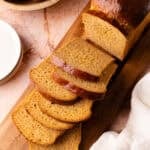
Sweet Potato Sourdough Discard Bread Recipe
Transform your sourdough discard into a vibrant Sweet Potato Sourdough Discard Bread! Soft, fluffy with a vibrant golden hue perfect for toasting or sandwiches.
Servings: 18 slices
Calories: 130kcal
Equipment
- Small Pullman Pan 9 by 4 inches
Ingredients
Dough
- 200 grams sweet potato 1 medium
- 7 grams active-dry yeast
- 169 grams water
- 28 grams honey sub sugar or maple syrup
- 113 grams sourdough discard
- 240 grams all-purpose flour plus more for dusting
- 240 grams whole wheat flour
- 6 grams salt
- 28 grams butter
Egg wash
- 1 egg beaten
Instructions
- Roast sweet potato: Preheat your oven to 425 F. Poke holes all over the sweet potato using a fork. Bake on a foil-lined baking sheet until the flesh is soft and skin looks puffy. Let the sweet potato cool completely.200 grams sweet potato
- Peel and mash the sweet potato once its cool enough to handle. Set aside.
- Bloom the yeast: Whisk the water, honey and yeast together in a large bowl. Cover the bowl and let the yeast bloom until foamy, about 15 minutes.7 grams active-dry yeast, 169 grams water, 28 grams honey
- Make the dough: Stir the sourdough discard and cooled sweet potato into the yeast mixture until fully incorporated. Fold the flours and salt in until a cohesive dough forms.113 grams sourdough discard, 240 grams all-purpose flour, 240 grams whole wheat flour, 6 grams salt
- Knead the butter into the dough until completely absorbed. The dough will feel greasy at first and gradually become smoother and less sticky. Cover the bowl with plastic wrap and let the dough rest for 10 minutes.28 grams butter
- ** If using a stand mixer, mix the dough ingredients except for the butter. Once a cohesive dough forms, knead the dough with a dough hook and slowly add the butter into the bowl 1 tablespoon at a time until completely incorporated about 5 minutes.
- Strengthen the dough: Turn the dough out onto a lightly floured work surface. Knead the dough by folding it in half, then pressing and pushing with the heel of your hand. Continue this process until the dough becomes smooth and elastic, about 5 to 10 minutes.
- First rise: Round the dough into a tight ball, and transfer it to a clean, lightly oiled bowl. Spread oil on top of the dough to prevent it from drying out.
- Cover the bowl with plastic wrap and set it in a warm place until doubled in volume, about 30 to 45 minutes. This could be shorter or longer depending on the temperature of your kitchen.
- Prep: Preheat the oven to 350 F. Line a 9 by 4-inch Pullman pan (see note) with parchment paper or brush liberally with oil.
- Shape the dough: Turn the dough out on a lightly floured work surface. Flatten the dough into a rough circle. Divide the dough into two portions.
- Working with 1 portion of dough at a time, fold the corners of the dough towards the center. Turn the dough over and round it into a tight ball by dragging it on your work surface in a circular motion. Nestle the dough into your loaf pan. Repeat.
- Final Proof: Cover the loaf pan with plastic wrap. Let the dough rise untouched in a warm place.
- The dough should fill your pan and rise about ½ an inch above the rim, about 30 to 45 minutes. The dough should gently spring back when lightly pressed with your finger.
- Brush the top of the dough with egg wash.
- Bake: Bake the dough at 350 F for 30 to 40 minutes, or until the loaf is golden brown and measures about 190 F to 200 F when probed with an instant-read thermometer.
- Move the bread to a wire rack and let it cool for at least 30 minutes before slicing.
Notes
- Make sure your yeast is not expired before baking this bread or your dough may not rise.
- Give your dough enough time to rise, waiting until it has doubled in volume before shaping or baking. Otherwise, your bread may be dense and gummy.
- Feel free to use active sourdough starter or sourdough discard to make this recipe.
- Both instant yeast and active dry yeast will work to make this recipe.
- This loaf can also be baked in a regular 8 by 5-inch loaf pan or make them into rolls.
- Use an instant-read thermometer to make sure your bread is fully baked. The center of the rolls should measure between 180 F to 190 F when done.
Nutrition
Calories: 130kcal | Carbohydrates: 25g | Protein: 4g | Fat: 2g | Saturated Fat: 1g | Polyunsaturated Fat: 0.3g | Monounsaturated Fat: 0.5g | Trans Fat: 0.1g | Cholesterol: 12mg | Sodium: 150mg | Potassium: 108mg | Fiber: 2g | Sugar: 2g | Vitamin A: 1630IU | Vitamin C: 0.3mg | Calcium: 12mg | Iron: 1mg